What happened
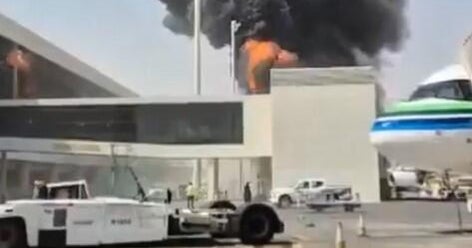
According to CBS News, Houthi attacks on Saudi Arabia in recent weeks have caused severe losses. Missiles have struck energy infrastructure and civilian airports, and at least 20 people have been killed. The Iran-backed group has also hit the headquarters of Saudi Aramco, the world's largest oil company. It is fighting Saudi-backed government forces for control of Yemen's Red Sea coastline.
The deadliest reported strike came on Oct. 10 at Riyadh's King Khalid Airport. It killed 13 people, including a U.S. citizen. The Saudi government, which CBS News described as opaque, regularly announces that Houthi missiles and drones have been intercepted. It said five were destroyed on Wednesday. But many projectiles have got through.
The fighting is adding upward pressure on oil and gas prices, CBS News reported, as Iran and the United States contest the nearby Strait of Hormuz. Neither Saudi nor Houthi authorities responded to the outlet's requests for comment.
A big budget, but a hard problem
Saudi Arabia spent $83 billion on defense last year, according to the Stockholm International Peace Research Institute. That is far more than any other Middle Eastern country, including Israel. Analysts say the money has not been enough to offset the kingdom's geographic exposure.
Saudi Arabia faces Iran across the Persian Gulf to the east, where its oil fields lie. Early in the war, Iran struck bases used by the U.S. in the kingdom. To the north, Iran-backed militias in Iraq were targeted by Saudi and U.S. strikes in July after dozens of attempted drone attacks. To the south is a border with Yemen of more than 800 miles, and much of Yemen is controlled by the Houthis. To the west, the group is contesting the Red Sea shipping lanes.
"Over the last eight months, they have been facing threats from every direction," said Elizabeth Dent of the Washington Institute for Near East Policy. Thomas Juneau of Chatham House pointed to the number of sites to protect, including airports, pipelines, oil export facilities, military bases and royal palaces. "It is simply extremely difficult to provide air defenses for all these sites over such a large area," he said. He added that hitting even a minority of targets counts as a success for the Houthis.
Interceptor shortages and cheap drones
CBS News reported that the wars in Ukraine and the Middle East have created a global shortage of interceptors, including the U.S.-made Patriot used by Saudi Arabia. Secretary of State Marco Rubio said Tuesday that Saudi Arabia, Israel and the U.S. all want more. He called them "probably the most in-demand product right now in the defense field." Patriot interceptors can cost as much as $4 million each. Saudi Arabia has bought 730 of them from Washington since 2020, according to U.S. military data. Dent raised the question of whether that expense makes operators hesitant to fire.
Cost is only part of the issue. Patriots were designed to stop ballistic missiles, but the Houthis also field cheap drones, some supplied by Iran and some local copies. Allison Minor of the Center for Strategic and International Studies said the group combines "an overwhelming number of relatively cheap systems" to "distract and disrupt and exhaust," and then weaves in more catastrophic missile attacks.
Dent said Houthi drones and cruise missiles can change trajectory, making them harder to track. A failure in one layer of defense can leave a gap, she said, which may have happened in the airport attack.
Seeking help from partners
Ukrainian-developed drone interceptors are one possible answer. They cost in the thousands of dollars and are made in the tens of thousands each year, while Patriots are made in the hundreds. Saudi Arabia and some neighbors have made deals to acquire them. Dent said they would not be a quick fix, because the systems are hands-on and need skilled, trained operators.
Analysts also question the readiness of Saudi forces. CBS News national security analyst Aaron MacLean said the armed forces are "structured and run according to the interests of its royal leadership, with an emphasis on regime security." He said that against a creative adversary, "Some shots are going to get through."
Minor said the Saudis have been "aggressively seeking out air defense support from a variety of partners." The kingdom has invoked a mutual defense pact signed last year with Pakistan and Turkey, under which an attack on one is treated as an attack on all three. Pakistan has confirmed a troop deployment, and Turkey is working toward one. France recently agreed to send "military means" to help protect the Yanbu oil terminal on the Red Sea.