A first-of-its-kind sample return
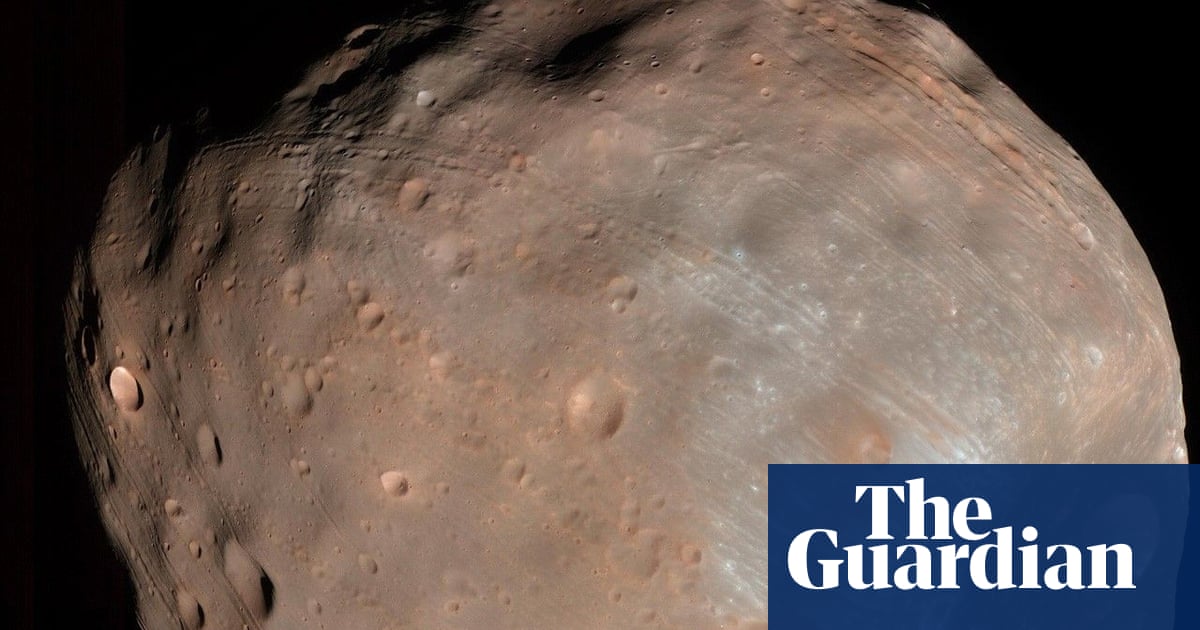
Japan is preparing to launch a spacecraft on what would be the first mission to bring material back from Phobos, one of two small, potato-shaped moons that circle Mars, according to The Guardian. The Japan Aerospace Exploration Agency, known as Jaxa, is aiming for liftoff on Tuesday aboard its H3 rocket, which the agency treats as a mainstay launcher.
The Martian Moons eXploration mission, or MMX, is expected to last about five years. Scientists hope the returned material will clarify how Phobos and its companion Deimos formed. They also hope it may offer hints about the origins of life in the solar system.
Japan leads the effort, but it is international. NASA and other national space agencies are contributing equipment and communications support.
Why Mars's moons remain a puzzle
Dozens of missions have headed to Mars since the 1960s, yet its moons are still poorly understood. Several Russian attempts to land on Phobos, including one launched in 2011, have failed.
Project manager Yasuhiro Kawakatsu said the moons have never been fully studied despite their potential importance. He described them as "the most important unclimbed mountains in the solar system."
A central question is what the moons are made of and where they came from. Some researchers think the crater-pocked bodies are leftovers from debris created when a large object struck Mars. Others suggest they are asteroids that arrived from elsewhere. Principal investigator Kiyoshi Kuramoto said: "We can almost certainly come to a conclusion by analysing soil samples."
Phobos was chosen mainly because it sits closer to Mars than Deimos does, so it may hold more information about the planet. Jaxa officials expect a small share of the collected material, about 0.1%, to be originally from Mars. The spacecraft will also fly past Deimos and make observations. Kuramoto said Phobos samples could shed light on Deimos as well, since the two are believed to share similar roots.
The journey and the hardware
After launch, the spacecraft is expected to reach the Mars region around August 2027. Kawakatsu said the actual flight distance would be far longer than the closest Earth-Mars separation. It will then operate near and around Phobos for three years, gathering data and samples, before heading home in 2031.
MMX has three modules, for propulsion, exploration and return. Only the return module will come back to Earth with the samples. The craft carries 13 instruments. These include a rover developed jointly by France and Germany, a NASA sampling device and gamma-ray instrument, and a deep space communication device from the European Space Agency. A Japanese radiation monitor will gather information that could help future crewed Mars exploration.
Kawakatsu said the Phobos samples could help scientists judge whether a Martian moon might serve as a base for a future crewed mission to the planet. The US, China and others hope to send astronauts to Mars.
Landing and collecting samples
The rover, named Idefix, is due to land first, in around 2029, for a mission of about 100 days. It will study the surface and supply topographical data so the main spacecraft can pick a relatively smooth, level landing site.
Jaxa then plans two sampling attempts using two methods. NASA's device uses pressurized gas to lift surface dust into a container, while Jaxa's coring tool takes material from a shallow depth below the surface. The first attempt will use both tools for surface and subsurface samples, and the second will add more subsurface material. Scientists say sampling several places improves the chance of finding any traces of past microbial life from Mars.
Touchdown is difficult because Phobos has only about two-thousandths of Earth's gravity. The exploration module has four-legged landing gear with shock absorption to limit bouncing. The rover's wheels are designed to grip in low gravity and to right themselves if it tips over, though Jaxa says it will move "at a snail's pace."
The samples will ride in a heat-protected capsule built to survive reentry. It is expected to land in Australia before being sent on to Japan.