Clashes in the capital
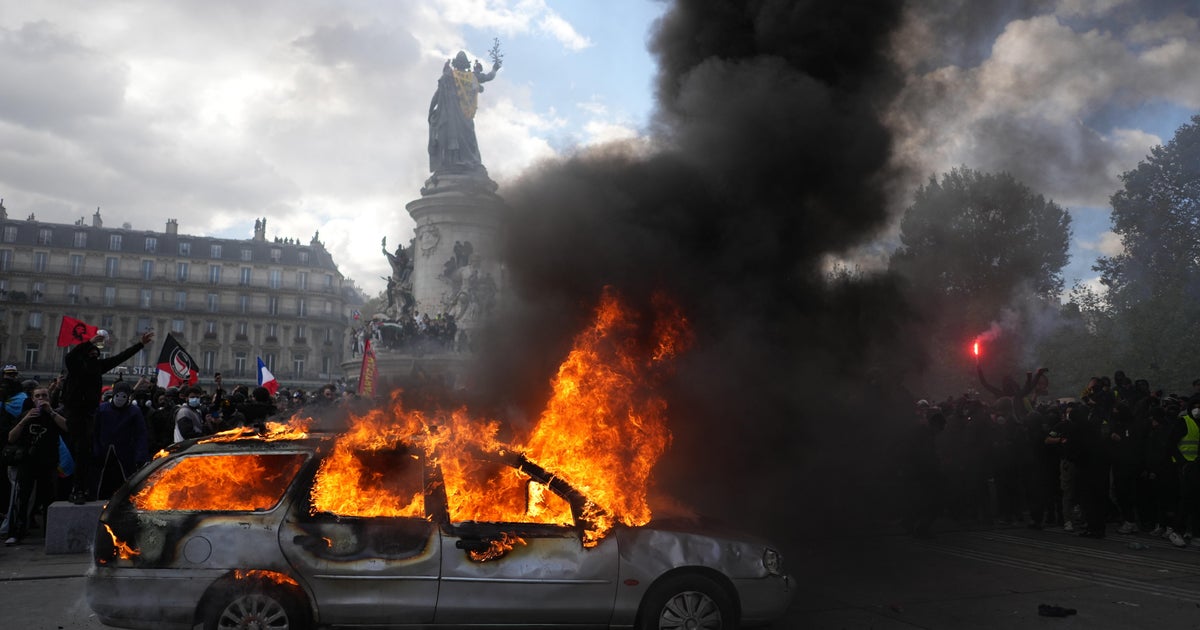
Saturday's nationwide rallies against the cost of living turned violent in Paris, where vehicles were burned and stores were ransacked, according to CBS News, citing Associated Press reporting. Riot police responded with tear gas and water cannons at the Place de la République, northeast of the city center, where people in hoods and masks hurled fireworks, paving stones and other objects at officers.
AP reporters described dark smoke rising from burning cars, bicycles and other vehicles, as well as overturned trash bins on fire. A kiosk was also in flames. Several people were hurt in the confrontations, the report said.
Interior Minister Laurent Nuñez's office said police worked to keep small groups from reaching government buildings. Numerous metro stops were shuttered at the request of police, including stations serving the Champs-Elysées area and the districts housing the seat of the presidency, parliament and ministries.
Peaceful marchers and unrest elsewhere
Most of those in Paris took part in an orderly march heading toward the northwest of the capital. Participants sang the national anthem, carried flags, and some played trumpets and violins, according to the report.
Trouble was also reported in other cities. In Lyon, where about 20,000 people marched, a fire started inside a tourist office. In Marseille, several shops and a municipal police station were damaged, and demonstrators briefly pushed into the lobby of City Hall. Mayor Benoît Payan told BFM TV the episode was "unacceptable," while calling the damage inside "limited."
Nuñez's office also pointed to violence by masked groups in Rennes, Toulouse, Montpellier and Grenoble, among other places. It cited a growing number of violent incidents nationally, including attacks on officers, looting and harm to public buildings. At least 272 arrests were made across the country, the report said.
A revived yellow vest message
Many demonstrators answered social media appeals to bring back the yellow vest movement, which arose in 2018 over social injustice. Plenty of people on Saturday wore the fluorescent vests that symbolized those earlier rallies. The anger, according to the report, is tied to sharp increases in gasoline, energy and food prices in recent months.
Sonia Mabrouk, 40, traveled from a western suburb of Paris with her daughter, who is in high school. She said she was marching against "everything that's going wrong," especially neglected public services. A veteran of the earlier yellow vest protests, she criticized policies she said favor the wealthy and burden the poorest. "There's a general sense of frustration and anger," she said.
The CGT, a major labor union, backed the day of action and called for higher pay and pensions, lower prices and defense of public services. The union said more than 500,000 people took part in the rallies. That is the union's own estimate, and the source did not offer an independent count.
Student unrest and the election
Student groups have staged school blockades since mid-September and urged supporters to join Saturday's marches. According to the report, recent weeks have brought thousands of arrests, hundreds of injuries and fires at schools, as the start of the academic year gave way to protests that are shaping the presidential campaign and attracting attention abroad.
Far-left candidate Jean-Luc Mélenchon, who has supported the high schoolers' movement, joined the Paris demonstration. Some teenagers have suffered severe injuries that critics have attributed to police riot-control weapons. Nuñez suspended use of one kind of stun grenade against young protesters after a 15-year-old lost a hand, the report said.