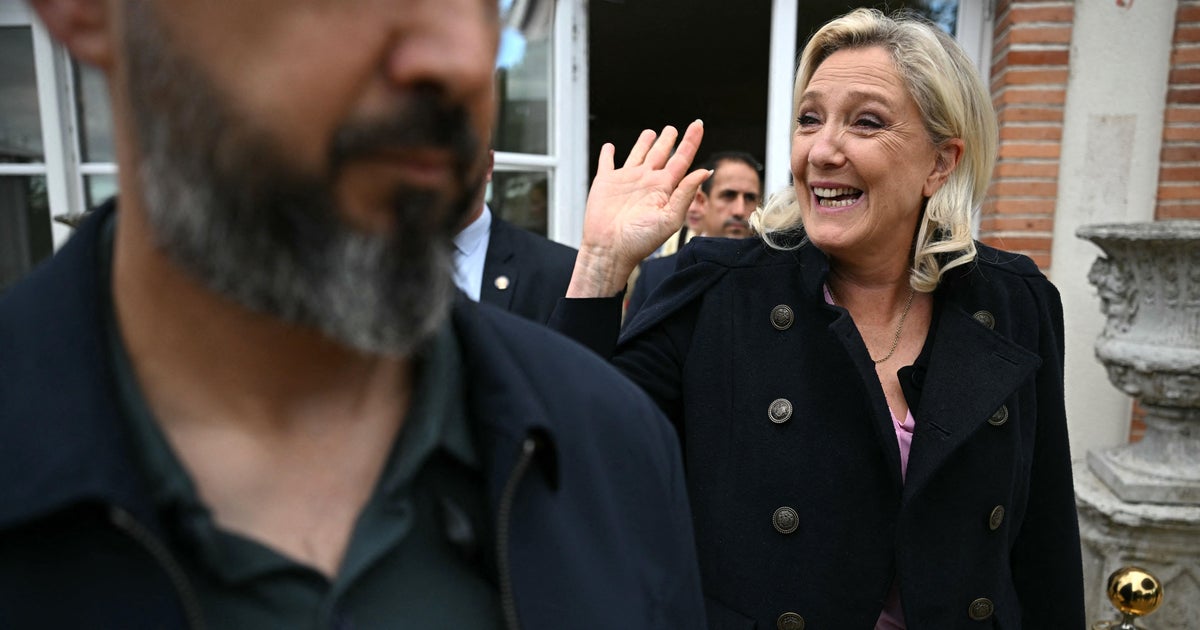
A changing of the guard on Europe's right
Millbank Tower overlooks the Thames, a short distance from the Houses of Parliament. For decades it housed the headquarters of Britain's Conservative Party. According to CBS News, it is now home to Reform UK, the populist party led by Nigel Farage. The party hopes to replace the Conservatives as the dominant force on the British right, and by some measures may already have done so.
CBS News describes the change as part of a broader upheaval. In France, Marine Le Pen's National Rally has overtaken much of the traditional right ahead of the presidential election next year. In Germany, the Alternative for Germany, or AfD, has made historic gains against the center-right Christian Democrats. Similar trends are visible in Italy, Spain, Sweden and other countries.
The movements have different histories and ambitions. Collectively, though, they are pushing established conservative parties toward a choice: adopt some of the populists' harder positions on immigration and national identity and cooperate with them, or risk losing voters to them.
Britain: from migration numbers to national identity
Steve Baker, a former Conservative government minister, told CBS News that politics is realigning around "identity and nationalism being the main axis of debate, not the economy." He pointed to President Trump's election as evidence of the same trend. The European Commission forecasts EU economic growth of 1.1% in 2026, down from 1.5% in 2025. Baker said the shift reflects frustration with institutions and warned that blame increasingly falls on ethnic and cultural minorities.
The Conservatives are fighting for survival after their 14-year hold on power ended in a crushing defeat in 2024. Reform has seized on anger over immigration. It accuses past Conservative governments of breaking promises to cut arrivals, as net migration reached a record of nearly a million in their final years in power. A September poll found 44% of Britons saw immigration as one of the nation's most important issues.
The argument has also turned to ethnicity. CBS News notes research finding growing support for ethnicity-based definitions of citizenship. Reform politician Suella Braverman, who was born in London and is of Indian descent, said she does not consider herself English because "Englishness is an ethnicity." Conservative leader Kemi Badenoch, whose parents are Nigerian, rejected that view at her party's October conference. "We must not let these people take us backwards," she said.
Baker said voter concerns about immigration and demographic change should not be dismissed. He said some residents of local areas in his former Wycombe constituency object to how much their communities have changed. Census data supports his claim that white residents are a minority in some local areas there, though not across the constituency. He also said he opposes the turn toward ethnicity: "I recoil in absolute horror to see this conversation going mainstream."
Reform's lead is not secure
Reform polled at around 28% in May. Support has recently fallen to 22% in some surveys, as the party deals with internal controversies and financial scandals, CBS News reports. It also faces pressure from further right. Restore Britain, led by former Reform lawmaker Rupert Lowe and publicly backed by Elon Musk, is targeting voters who think Farage's party is not pushing hard enough on immigration, Islam and national identity. One poll put its support as high as 9%.
Germany: the firewall under pressure
Germany's history as the birthplace of the Nazi party makes the question especially fraught. Since World War II, its established parties have kept a political firewall, known as the brandmauer, refusing to enter governing coalitions with parties tied to nationalist, anti-democratic rhetoric or extremist movements. That firewall has held against the AfD. Some regional authorities have designated the party an extremist group because of the associations and rhetoric of figures within it.
The AfD openly uses the term "remigration." Anti-hate groups say extreme right-wing activists have used it to advocate expelling all immigrants and, in some cases, non-white European citizens. The party says it means the lawful return of foreigners who are required to leave, and it rejects removing German citizens on the basis of ancestry. German security authorities, however, have documented links between AfD figures and extremist activists who favor a broader, ethnicity-defined version of the idea.
In September, the AfD won 43.8% of the vote in Saxony-Anhalt, more than doubling its previous result. Chancellor Friedrich Merz's Christian Democratic Union, which had led the state government, finished a distant second with 17.2%. The AfD's base is strongest in the east, where resentment over reunification, economic inequality and distrust of institutions run deep. Its support now reaches beyond that base. In the 2025 federal election it won approximately 32% in eastern states and 18% in the west, becoming the second-largest party nationally.
Dissatisfaction over the 2015–2016 migration crisis has also helped the party. Germany took in about 890,000 asylum seekers in 2015 alone, more than any other European nation. AfD politician Tomasz Froelich told CBS News the party draws voters from across the spectrum, especially working-class voters, skilled industrial workers and small business owners worried about their finances.