What CBS News reported
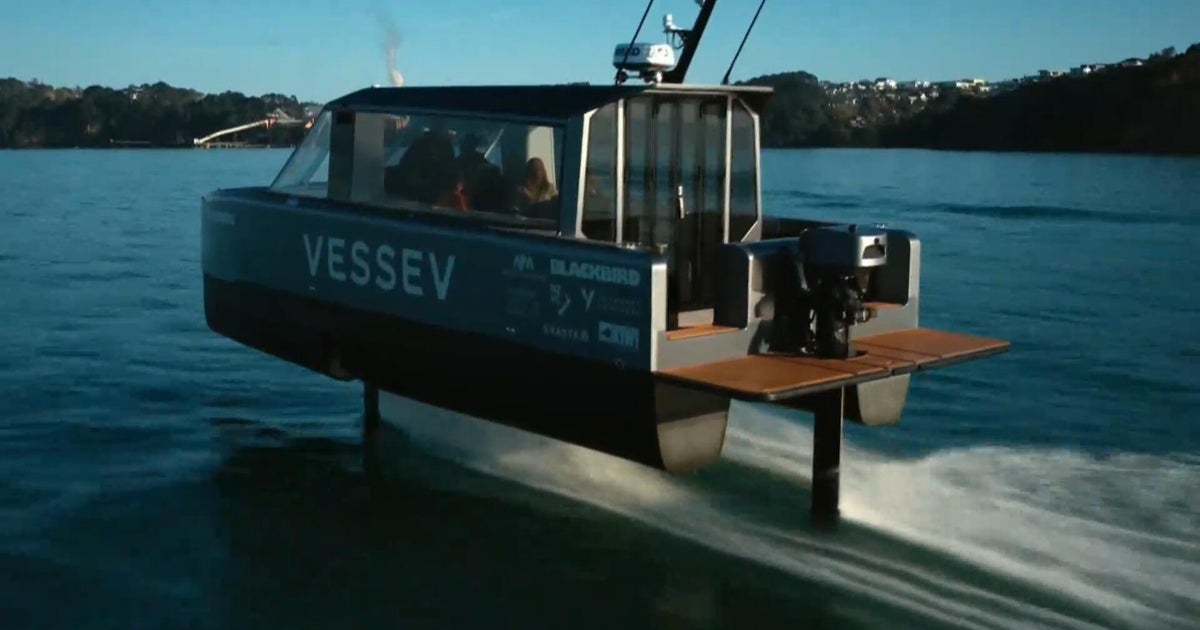
CBS News published a report on a new electric hydrofoil ferry that its makers hope will change how people travel across bodies of water. According to the network, the vessel is intended to make a water commute smoother while also being friendlier to the environment.
Kris Van Cleave, a CBS News correspondent, took a ride on the boat as part of the story. The published summary describes the trip only in broad terms, and it does not identify the builder, the route, the passenger capacity or the price. This article therefore sticks to what the network said and to general background on the technology involved.
How the technology works
A hydrofoil is a boat fitted with wing-like blades beneath the hull. As the vessel gains speed, those blades generate lift, much as an airplane wing does, and raise the hull up out of the water. With less of the boat in contact with the surface, there is generally less drag, and passengers are often less affected by small waves and chop.
An electric ferry replaces a conventional diesel engine with electric motors fed by onboard batteries. Such boats produce no exhaust while operating and tend to be quieter, which can matter in busy harbors and near waterfront neighborhoods. Combining the two ideas is attractive because reduced drag can lessen the energy a boat needs, which is a useful advantage for a battery-powered vessel.
Why ferries draw interest
For many commuters in coastal and waterfront communities, a ferry is a practical alternative to crowded roads, bridges and tunnels. Riders often value the ability to sit, work or simply look out at the water rather than sit in traffic. Operators and city planners, meanwhile, face pressure to cut pollution from transportation, and older ferries burning diesel fuel are one target.
The CBS report frames the new boat in that context, presenting it as an effort to address both comfort and environmental concerns. Whether those goals are met in everyday service would depend on how the vessel performs once it is carrying regular passengers on a set schedule.
Questions that remain
Electric boats face well-known hurdles. Batteries are heavy and expensive, and the distance a vessel can travel on a charge affects which routes it can serve. Docks need charging equipment capable of refilling batteries quickly between trips, and that can require significant investment and coordination with local power utilities.
Hydrofoil designs bring their own considerations, including how the foils handle rough water, floating debris and busy shipping lanes, as well as the maintenance needs of the underwater components. None of these issues were addressed in the CBS summary, so it is not clear how this particular ferry deals with them.
Further reporting would be needed to learn where the boat might enter service, who would operate it and what fares or public funding might be involved. For now, the CBS News piece offers a first-hand look at a design that its backers see as a possible model for future water transit.