Unscrolled.
Live
worldFrance sees violent protests over living costs, student grievancesworldUkraine reports Starlink speed restrictions hampering drone defenseworldMasked settlers attack European diplomats in occupied West Bank - The GuardiantechExperimental drug reverses severe fatty liver disease in animal studiesworldOregon Elementary School shooter identified as 16-year-old John GriffinworldMalibu wildfire rages, triggering evacuations in Southern CaliforniabusinessOil surges to five-month high amid Middle East and Ukraine tensionsworldMan charged with rape, fentanyl death of FIT college studentworldKristi Noem steps down as Trump's Shield of the Americas envoyworldHouthis escalate attacks on Strait of Hormuz, Saudi ArabiaworldWorkers report lowest level of financial security in 7 yearsworldMicroplastics generate harmful chemicals when in waterworldNine FBI employees sue over firings tied to Trump documents caseworldMiami University issues all-clear after active threat alertbusinessWholesale inflation hits 2022 levels as September prices surgetechMicrosoft redesigns Photos app to unify PC, OneDrive, iCloud galleriesworldFriend of woman allegedly killed by Massachusetts police officer: "It was complete, 100% exploitation"world‘We’re done’: Ukraine resumes strikes on Russian oil refineries as anger mounts with TrumpbusinessInflation surged in September as U.S. energy costs jumpedentertainmentVariety’s 2026 Artisans to Watch: ‘Obsession’ Makeup Head, ‘Project Hail Mary’ Animation Supervisor, ‘La Bola Negra’ Composer and MoreworldFrance sees violent protests over living costs, student grievancesworldUkraine reports Starlink speed restrictions hampering drone defenseworldMasked settlers attack European diplomats in occupied West Bank - The GuardiantechExperimental drug reverses severe fatty liver disease in animal studiesworldOregon Elementary School shooter identified as 16-year-old John GriffinworldMalibu wildfire rages, triggering evacuations in Southern CaliforniabusinessOil surges to five-month high amid Middle East and Ukraine tensionsworldMan charged with rape, fentanyl death of FIT college studentworldKristi Noem steps down as Trump's Shield of the Americas envoyworldHouthis escalate attacks on Strait of Hormuz, Saudi ArabiaworldWorkers report lowest level of financial security in 7 yearsworldMicroplastics generate harmful chemicals when in waterworldNine FBI employees sue over firings tied to Trump documents caseworldMiami University issues all-clear after active threat alertbusinessWholesale inflation hits 2022 levels as September prices surgetechMicrosoft redesigns Photos app to unify PC, OneDrive, iCloud galleriesworldFriend of woman allegedly killed by Massachusetts police officer: "It was complete, 100% exploitation"world‘We’re done’: Ukraine resumes strikes on Russian oil refineries as anger mounts with TrumpbusinessInflation surged in September as U.S. energy costs jumpedentertainmentVariety’s 2026 Artisans to Watch: ‘Obsession’ Makeup Head, ‘Project Hail Mary’ Animation Supervisor, ‘La Bola Negra’ Composer and More
Tech

USC Scientists Create Renewable Supply of Cancer-Fighting Cells

USC researchers report they can grow immature immune cells called GMPs almost indefinitely in the lab, engineer them to target tumors, and slow cancer in mice, according to a study in Cell.

U
By Unscrolled
October 16, 2026 · 12:47 PM · 2 min read
Follow
USC Scientists Create Renewable Supply of Cancer-Fighting Cells
Photo: Science Daily

What the researchers found

Scientists at the University of Southern California have developed a way to produce what could be a renewable supply of cancer-fighting immune cells, according to a study published in Cell and summarized by Science Daily. The team worked with granulocyte-monocyte progenitors, or GMPs, which are immature cells that normally develop into macrophages and other immune cells.

The researchers reported that GMPs can be grown extensively in the laboratory while keeping their ability to become functioning immune cells. The cells can also be genetically modified to recognize specific cancer markers and to strengthen wider immune responses.

In experiments with mice, the engineered cells established themselves in bone marrow, produced new immune cells and slowed the progression of both blood cancers and solid tumors.

A challenge to a long-held view

The finding also bears on basic biology. Self-renewal, the ability to divide repeatedly while keeping original properties, has traditionally been tied mainly to hematopoietic stem cells, which can generate all major types of blood and immune cells. Progenitor cells are further along in development and are generally thought to have less capacity for long-term self-renewal.

The USC team showed that GMPs can self-renew under carefully controlled laboratory conditions. Qi-Long Ying, the study's corresponding author and a professor of stem cell biology and regenerative medicine at the Keck School of Medicine of USC, said: "We found that, under the right conditions, GMPs can also self-renew, dividing extensively while keeping their identity and ability to produce functional immune cells."

Why start with progenitors instead of macrophages

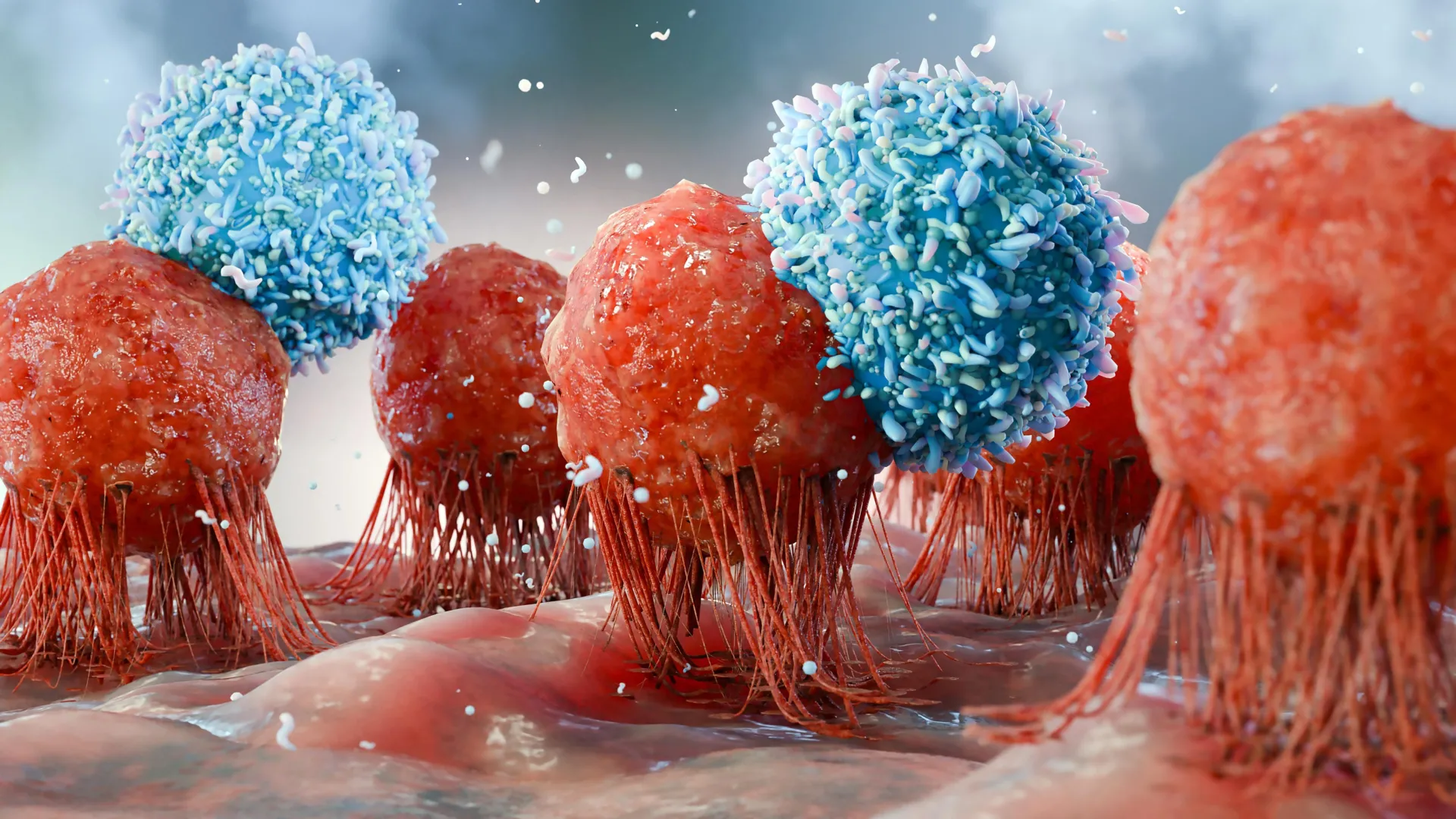
Macrophages, whose name comes from Greek words meaning "big eaters," engulf bacteria and damaged cells and help coordinate other immune cells. Some can enter tumors and attack cancer cells, which makes them attractive for treating solid tumors. Engineered T-cell therapies have had their greatest successes against certain blood cancers, while solid tumors have proved harder to treat.

Mature macrophages are difficult to multiply in large quantities outside the body and hard to modify genetically, and they can be damaged by freezing and storage. After infusion, they often collect in organs such as the lungs and liver rather than spreading widely, and they can disappear relatively quickly.

To get around these problems, first author Shi Yue and colleagues developed a precisely defined chemical mixture that let GMPs survive and multiply for extended periods while preventing them from maturing too early. After extensive expansion, the cells kept their defining molecular characteristics and could still become functional macrophages and related cells.

Engineering the cells and outside validation

The team engineered GMPs to carry a chimeric antigen receptor, or CAR, which lets immune cells identify a particular marker on cancer cells. CAR technology is already used in treatments that modify a patient's T cells. Some progenitor cells also received an additional immune-activating signal meant to recruit and stimulate nearby immune cells, including T cells.

To test reproducibility, collaborators in the Stanford University laboratory of Ravi Majeti independently showed that GMPs could be maintained for extended periods and genetically engineered. Majeti, who directs Stanford's Institute for Stem Cell Biology and Regenerative Medicine, said the method "opens the door to numerous translational applications, much like T cell expansion and engineering."

Why it matters
  • 1.Cancer immunotherapy can be limited by how hard it is to manufacture enough engineered cells and keep them active, and solid tumors remain a major challenge. A scalable source of engineered immune cells could eventually widen the options for patients.
  • 2.The results so far come from laboratory and mouse experiments, so any benefit for people would require further research.
Sources

External links are provided for reference. Unscrolled is not responsible for the content of external sites.

Follow

Related in Tech