A lump and a dismissive visit
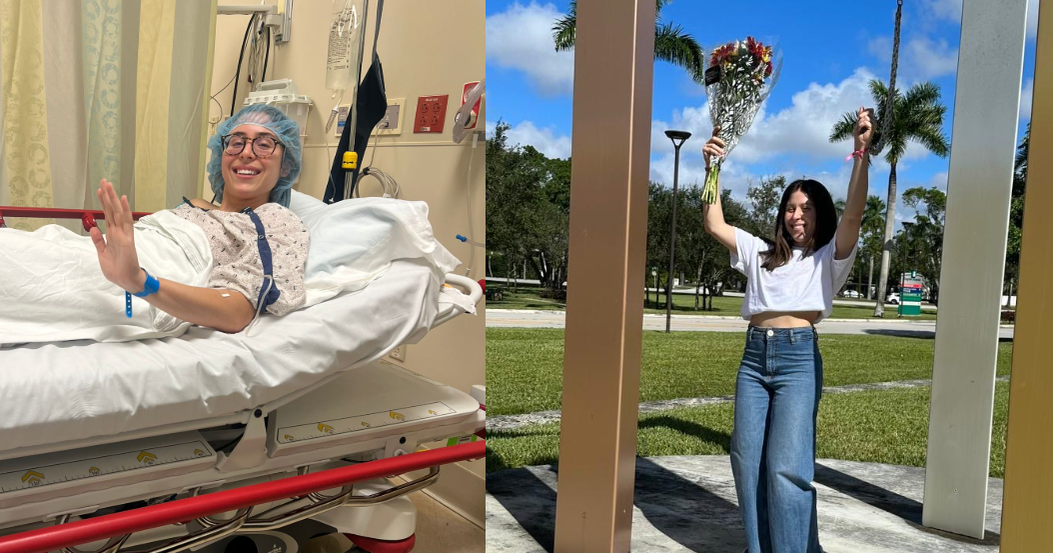
Andrea de Armas was 26 and had no known family history of breast cancer when she found a lump in her breast, CBS News reported. Before starting a demanding program to train as a physician assistant, she decided to have it checked.
The appointment was unsettling from the start, she said. She was a young woman in a waiting room filled with older patients getting routine scans. Then the ultrasound technician seemed to doubt her concerns. "The tech had 'Why are you here?' vibes," De Armas recalled, adding that she felt "belittled and just weird."
After the scan, a radiologist reviewed the images and recommended she get a biopsy immediately. De Armas described the contrast with the technician's skepticism as a sharp turn, and said she had "a lot of emotions and felt so conflicted" about the experience.
A diagnosis on the eve of PA school
De Armas made an appointment at Baptist Health's Herbert Wertheim Cancer Institute, where she had another scan and a biopsy. Four days later, the day before her physician assistant program began, she learned the lump was malignant.
She said she first felt paused, simply listening, before shifting into what she called "go mode." With classes starting the next day, she said, she felt she needed to act.
Further testing found a genetic mutation associated with increased breast cancer risk. De Armas said that knowledge brought some relief because it helped explain where the cancer could have come from, and she noted it could help relatives get the screenings they need.
Why young women's cases can be missed
According to the American Cancer Society, about one in 10 new breast cancer diagnoses are in women under 45, though only about one in 1,344 women are diagnosed in their 20s. The group also says incidence rates have risen by about 1% per year, and slightly more new cases are found in women under 50 than in women over 50.
Dr. Mary Gemignani, director of the Women's Early Onset Cancer Program and chief of breast surgery at NYU Langone, said young women tend to be diagnosed at a later stage and are more likely to have "more aggressive" tumors or rarer subtypes. Gemignani, who was not involved in De Armas' care, said in a 2025 interview with CBS News that she has heard many women say they were told they were too young to have breast cancer.
Treatment around a school schedule
De Armas had a lumpectomy in early June, a month after her diagnosis, during a break in her school calendar. During chemotherapy, she received treatment at 6:50 a.m. and spent afternoons in class. She scheduled a bilateral mastectomy and reconstruction for winter break.
Gemignani said young patients often have "unique needs" because they may be balancing school, work or family obligations with fewer resources than older generations. Dr. Cristina Lopez-Penalver, the surgical oncologist who treated De Armas, said the schedule let her stay on track while protecting her health. "We worked together as a team," she said.
De Armas graduated as a physician assistant in 2025 and began working in the field a month later. Now 30, she says she is cancer-free but remains on hormone therapy because of the makeup of her cancer. The medication put her into temporary menopause, which Gemignani described as another unique concern for young patients. De Armas also had to make fertility decisions sooner than expected and continues regular follow-ups with her oncologist.
Her message to others
"I'm really lucky. I feel like I'm doing OK," De Armas said, noting that adjusting to her body's changes took time. She said she can live a pretty normal life for a 30-year-old.
She hopes her story encourages people to trust themselves and press for answers when something feels wrong. Feeling nervous about a scan is "a valid experience," she said, but people should "never let the fear of the unknown freak you out."