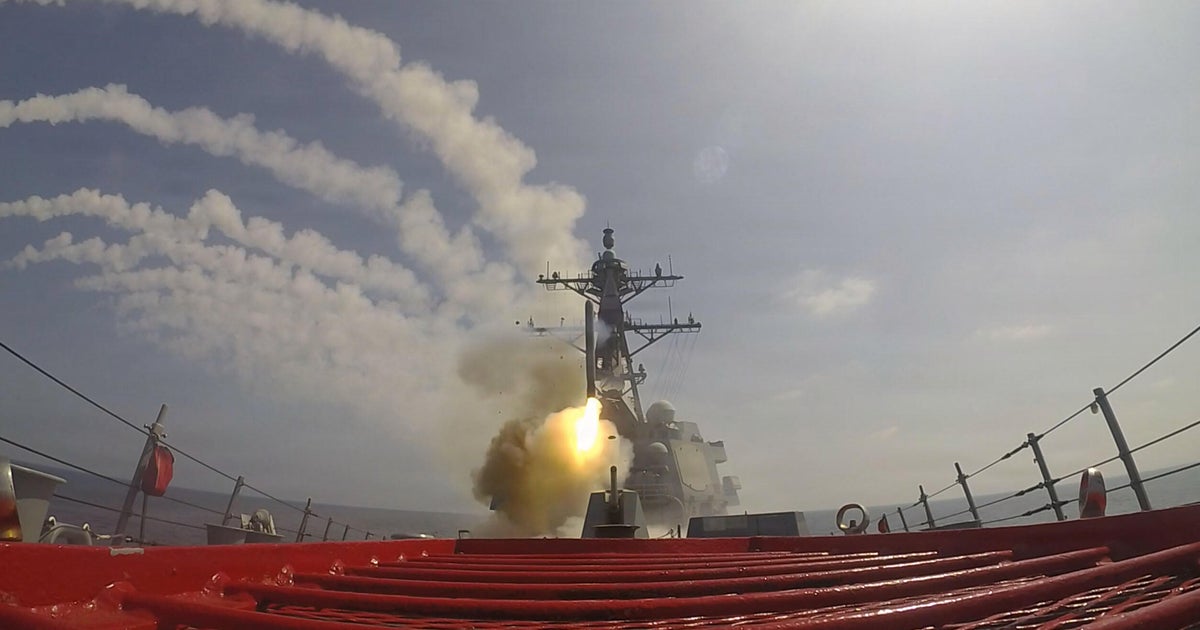
The U.S. and Saudi militaries launched airstrikes late Tuesday on Iranian-backed groups in Iraq , U.S. Central Command said , after Iran and its proxies allegedly targeted American forces over the last few days.
The strikes could pose a challenge to a five-day lull in U.S. attacks on Iran, as President Trump says he wants to give diplomacy a chance. It's unclear when — or whether — strikes on Iran could resume.
The U.S. also said Tuesday it prevented an Iranian "surprise attack." The U.S.-Saudi operation was aimed at "terrorist logistics and weapons sites across eastern Iraq," CENTCOM said in a statement posted to social media. The Saudi Ministry of Defense also confirmed that it "conducted precise and targeted strikes," citing its right to self-defense.
At least 10 members of the Popular Mobilisation Forces (PMF), an Iran-backed paramilitary alliance, were killed in the strikes, according to two sources quoted by the French AFP news agency. CENTCOM said the strikes were in response to more than 30 attempted drone attacks on U.S. forces and Saudi energy sites over the last three days, describing the attacks on U.S.
assets as unsuccessful. Saudi Arabia said it has intercepted drones that were launched from Iraq and targeted petroleum facilities in Riyadh and the country's east. The two countries did not name the groups in question, but Iran backs several Shiite militia groups in Iraq that have launched rockets at U.S.
forces in the past. Some, like Kata'ib Hezbollah, are designated by the U.S. as foreign terrorist organizations.
CENTCOM alleged the attacks were directed by Iran's Islamic Revolutionary Guard Corps. "The IRGC and its terrorist proxies must cease these attacks to avoid further U.S. military response," CENTCOM wrote in its statement.
Earlier Tuesday, CENTCOM said Iran's Revolutionary Guards mounted an "attempted surprise attack," launching ballistic missiles at U.S. forces in the region. The missiles were intercepted.
The scattered attacks come as the U.S. holds off on directly striking Iran, after carrying out almost two weeks of nightly strikes on Iranian targets that ended Thursday night. Mr.
Trump said Tuesday morning that the U.S. and Iran have had "very good talks," expressing optimism that the two countries could reach an agreement, but he warned that the U.S. will "finish the job" if a deal isn't struck with the Iranian regime.
Iran has said it isn't currently seeking direct talks with the United States. Sticking points between the two countries remain, including over Iran's push to maintain control over the Strait of Hormuz and the U.S.' desire for Iran to give up its uranium enrichment program. Meanwhile, another Iran-backed militant group — the Houthis in Yemen — has fired at Saudi tankers in the Red Sea, threatening a key waterway off Saudi Arabia's western coast as Iranian attacks seal off the Strait of Hormuz on the other side of the Arabian Peninsula.
U.S. says it thwarted Iranian missile attack on troops in Middle East Pentagon lists 4 killed in Iran war under "Overseas Operations Casualties" Waltz says pause in strikes against Iran is "giving diplomacy some space" Poll: Most say Iran conflict more difficult than Trump had expected Zelenskyy accuses Russia of helping Iran target U.S. bases with satellite images Niall Ferguson: The Endless Almost-Deal in Iran It’s Been One Week of War in Iran.
Here’s What Eight of our Contributors Have Learned.