What happened in Ukraine
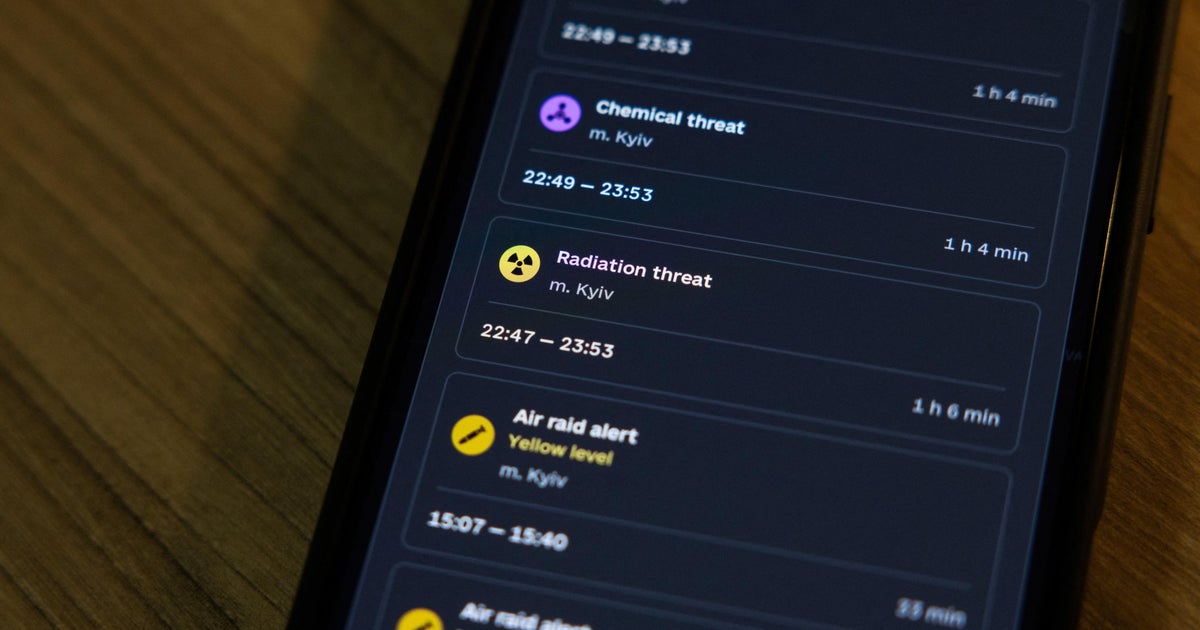
Air Alert, a widely used Ukrainian warning app, began sending false messages at 10:47 p.m. local time on Sunday, according to CBS News. The notices claimed there were radiation and chemical dangers, a nuclear attack and even street combat in Kyiv. The app was built by Ajax Systems and Stfalcon, with support from the Ministry of Digital Transformation.
Some Ukrainians use the app to decide whether to head for shelter when Russian missiles and drones approach. Many also follow Telegram, where the Air Force and security analysts post more detailed information about incoming strikes.
The Ukrainian Air Force said on several platforms at 11:02 p.m. that the alerts were false, 10 minutes after the first appeared. In a Telegram post, it said the app appeared to have suffered "hostile interference" and that there was "no radiation threat." It urged people to stay calm and follow official updates. Some Kyiv residents told CBS News they realized the messages were fake as soon as they checked Telegram channels.
The Russian app is hit hours later
Early Monday, at 2:45 a.m. Moscow time, Russia's Emergencies Ministry app was also compromised. Russian media, which are tightly controlled by the state, reported that false alerts reached users in 33 regions, according to CBS News.
Those messages reportedly warned that "nuclear warheads" were being launched across the country. They told residents to stockpile food for three weeks and take cover in basements.
The Russian ministry said the attackers exploited a weakness in the app's administrative panel. Officials responded by disconnecting and isolating the affected services.
Responses from developers and the military
The developers of Air Alert said "unauthorized interference" had taken place. They temporarily switched off both push notifications and the app itself.
Yurii Ihnat, a spokesman for the Ukrainian Air Force, said the breach had no effect on the country's security operations. He added that Air Alert is not tied to the military's command systems, so the false warnings did not come from, or travel through, those networks.
CBS News did not report who was responsible for either breach, and neither government was quoted as attributing the Russian incident to a specific party.
The wider context
The incidents came as a temporary ceasefire expired at 10:59 p.m. Ukraine time on Sunday in and around Oleshky, a southern Ukrainian city that Russia has occupied since 2022. The truce began on Oct. 27, and both sides credited U.S. first lady Melania Trump and Pope Leo for it. It let humanitarian aid reach the city and allowed some civilians to leave.
Ukraine's human rights commissioner, Dmytro Lubinets, said both sides had respected the arrangement and were discussing additional humanitarian steps. CBS News also pointed to related coverage, including a U.S. approval of a sale of 500 Patriot missiles to Ukraine and a report that Russian strikes killed 14 people in Ukraine even as the local truce offered some hope.