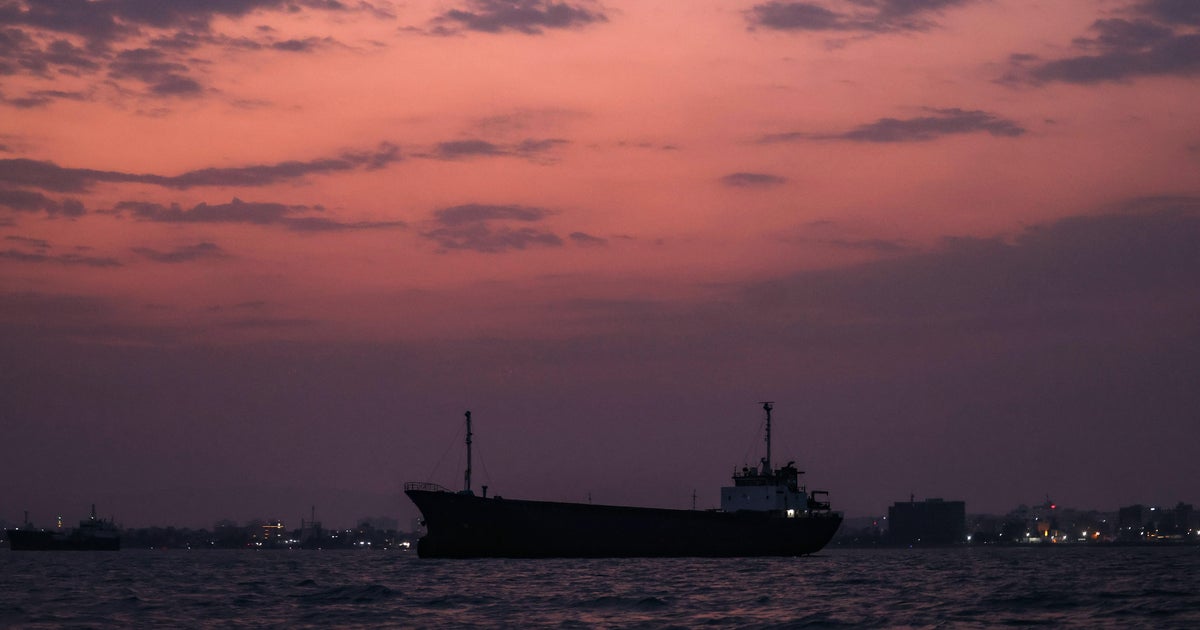
Iran says tankers struck mines
Iran's navy claimed Thursday that four oil tankers had struck sea mines in the Strait of Hormuz. It accused the vessels of sailing along an illegal shipping lane promoted by the United States, according to CBS News.
In a statement, the navy said one tanker was damaged and caught fire after hitting mines east of the strait, leaving it unable to continue. It said the incident happened before noon Thursday in an area Iran has designated as prohibited and unsafe. Earlier in the day, the Islamic Revolutionary Guard Corps said three tankers had been disabled by mines. The UK Maritime Trade Operations center confirmed that one vessel in the area was seen on fire.
The navy warned that the strait was closed "to violating vessels that, without coordination and relying on the lies of the U.S. president, intend to pass through prohibited and unsafe areas." It added that "these uncoordinated transits through high-risk areas have exposed and will continue to expose vessels and their crews to serious dangers."
A tanker hit by a projectile
Separately, the UKMTO reported that a tanker was struck by a projectile in the strait at about 7:30 p.m. local time. The ship was leaving along the southern route promoted by the U.S. when it came under fire. The UKMTO said there were no reported injuries to the crew or environmental impact "at this time."
It was not clear who fired the projectile. CBS News noted that Iran has claimed credit for several ships hitting mines on Thursday and has been targeting vessels on the southern route more often.
A dispute over mine clearing
The U.S. has encouraged shippers to use a route in the southern part of the strait, while Iran insists vessels may use only the northern routes it has authorized.
In late August, President Trump and CENTCOM chief Adm. Brad Cooper said the main shipping lanes had been cleared of mines and were safe for commercial traffic. Cooper said the U.S. military had "meticulously and quietly" removed mines previously laid by the IRGC. He said internationally recognized transit routes were free of Iranian sea mines.
On Thursday, IRGC spokesperson Brig. Gen. Abolfazl Mohebi challenged CENTCOM to back up its mine-clearing claims with independent evidence, "not a statement." Separately, Rear Adm. Jalil Moghadam told Iran's state-run IRNA that the navy had carried out more than 20 operations against U.S. warships and about 300 operations targeting American interests during the war. He said the navy remains operational despite U.S. claims that it was destroyed. CBS News noted that Moghadam offered no evidence for his claims.
Diplomacy stalls and the fallout spreads
Multiple outlets have reported that Vice President JD Vance sent a letter to Mohsen Rezaei, secretary of Iran's Supreme National Security Council, seeking to restart peace talks. President Trump said Wednesday that the letter was a focused outreach meant only to help get medical supplies into Iran.
According to the semi-official Tasnim News agency, which is closely tied to the IRGC, Iran has not responded. Tasnim said Tehran would not drop its core ceasefire conditions, which include lifting the American blockade of Iranian ports, easing sanctions and giving Iran access to frozen assets held abroad.
Qatar, which has been mediating between Iran and the U.S., also denied allegations that it interfered in Israel's elections. Foreign Ministry spokesman Majid al-Ansari called the accusations "ridiculous and dangerous in equal measure" and said Qatar would continue its mediation. The denial followed Benjamin Netanyahu's claim that Tuesday's vote was "stolen by Arab parties." Israel's Shin Bet is investigating possible Qatari and Turkish funding, according to the Jerusalem Post and Channel 13.
Other developments
A Pentagon official told CBS News that Defense Secretary Pete Hegseth fired Lt. Gen. Brett Sylvia, the Pentagon's top military planner, after he was accused of leaking classified information about the Iran war.
In Yemen, the Houthis said a Saudi strike on a residential area in Taiz province killed 12 people. Fighting there reignited in July after a four-year truce, according to CBS News. The Houthis are allied with Iran, and Saudi Arabia backs Yemen's government.