What the UK is building
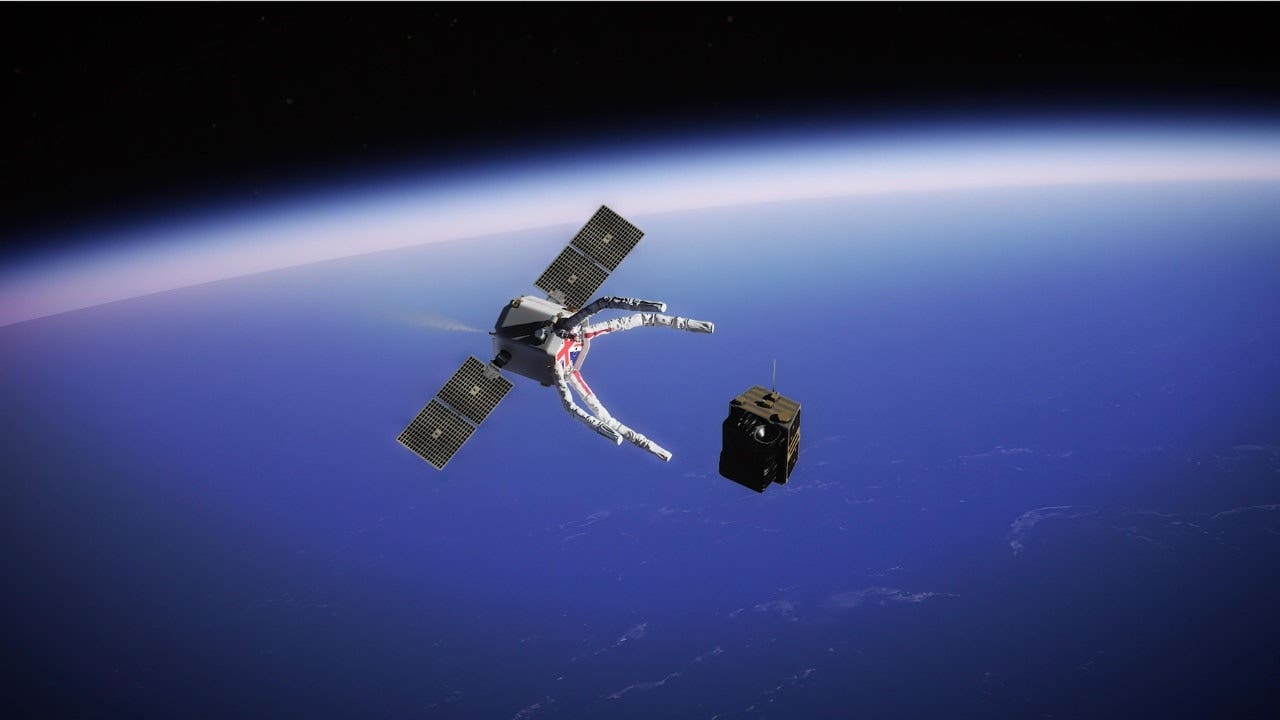
The UK Space Agency has selected aerospace company ClearSpace UK to develop a spacecraft designed to remove dead satellites from orbit, according to a Fox News report. The contract is valued at roughly $81 million and falls under Britain's Active Debris Removal mission, known as UK ADR.
The spacecraft is targeted to launch in 2029 from SaxaVord Spaceport in Scotland's Shetland Islands. Its first assignment is to remove two defunct UK-registered satellites from low Earth orbit. The government wants both satellites gone by 2032.
If the mission works, it would show that a single spacecraft can capture and dispose of more than one dead satellite instead of being sacrificed after its first cleanup. The vehicle is being designed with potential refueling and reuse in mind.
How the capture would work
The task is difficult because objects in low Earth orbit typically travel at roughly 17,000 mph or faster, and some dead satellites tumble. The cleanup craft must first carefully coordinate its movements with its target, then use a robotic capture mechanism to take hold of it.
Once the satellite is secured, the spacecraft will move it into a lower orbit and release it. Atmospheric drag is expected to pull the satellite down until it reenters and burns up. Fox News noted that engineers still have to prove the technology can handle these operations safely.
Why orbital debris is a growing concern
According to the European Space Agency's debris statistics, updated October 14, 2026, about 47,140 objects are regularly tracked in Earth orbit. That count includes working satellites, inactive spacecraft, rocket bodies and debris. ESA estimates millions of smaller pieces also circle the planet.
Speed makes even tiny fragments dangerous. ESA says a piece of debris just one centimeter across can carry enough energy to disable a spacecraft, and it has warned that an object that size could penetrate the International Space Station's protective shielding.
Collisions between large objects can create many more fragments, a potential chain reaction known as the Kessler syndrome. ESA's 2026 Space Environment Report warns that active debris removal will be necessary to prevent long-term debris growth driven by collisions.
Risks to crews and to the ground
In November 2021, ISS crew members sheltered inside docked Dragon and Soyuz spacecraft after a Russian anti-satellite weapons test produced a debris cloud, NASA confirmed. The station and crew remained safe.
Debris can also come back down. Most small pieces burn up, but larger or heat-resistant components can sometimes reach the ground. Space environmentalist Ewan Wright of the University of British Columbia told Space.com that about 124 rocket stages reentered uncontrolled in 2024, and estimated a 33% chance over a decade of at least one person worldwide being killed by falling rocket debris if that rate continued. The report stressed that this is a global rocket-stage estimate, not a measure of risk from Britain's two targets.
ESA reports that casualty risk from uncontrolled reentries has risen in recent years, though the overall probability remains low compared with many everyday risks.