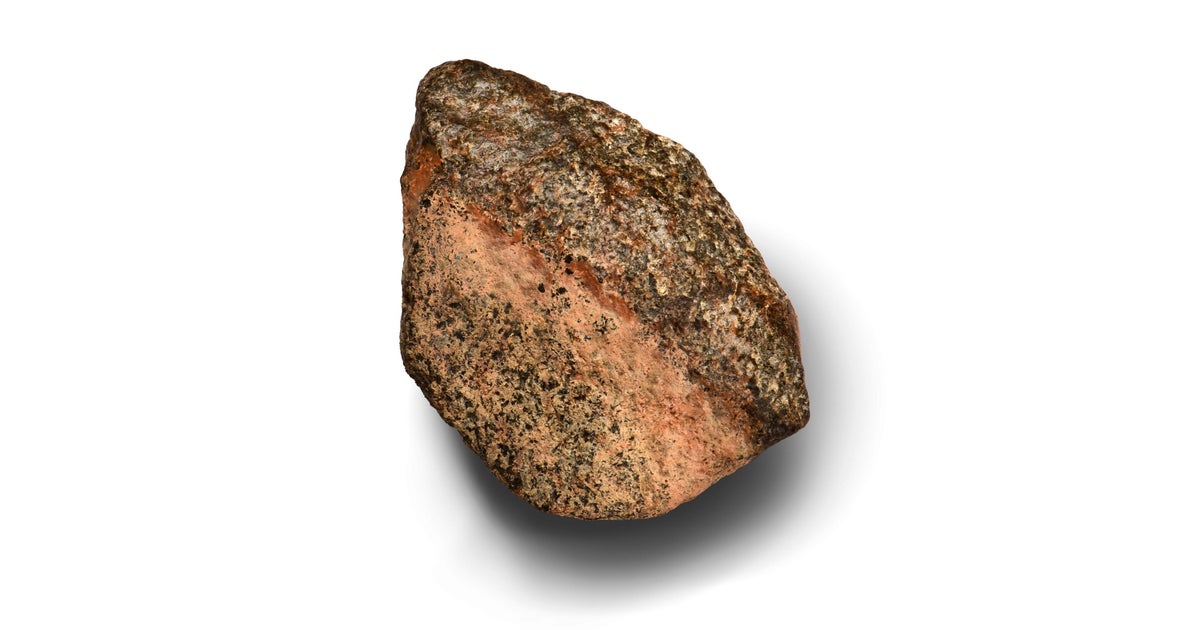
A Saharan find with a Martian origin
A rose-colored meteorite discovered in the Sahara Desert in 2022 has been confirmed as a piece of Mars that dates back about 4.1 billion years, according to a NASA study reported by CBS News. The rock weighs just under two pounds and turned up in Mali. It was given the name Teghaza 001, a reference to the area of its discovery, NASA said in a news release.
Scientists say it is one of roughly 435 meteorites known to have come from Mars. Researchers can confirm a Martian origin by comparing a meteorite's chemistry and mineral content with the samples and data gathered by NASA's missions to the planet.
Dating work placed Teghaza 001 among the three oldest Martian meteorites found on Earth, NASA said. The agency described it as offering "a rare snapshot" of the planet's crust and how it formed.
What the rock reveals about early Mars
Earlier ancient Martian meteorites gave scientists only limited views of the planet's early history. According to NASA, Teghaza 001 goes further by showing how the Martian crust took shape as magma cooled and how water at the surface later changed it.
The meteorite contains an unusual combination of volcanic minerals, including zircon crystals. NASA said that mix matches what the Mars Reconnaissance Orbiter has observed in the planet's southern highlands.
Francis Tissot, a Caltech geochemistry professor, helped the team apply a pioneering dating technique. It used a sample smaller than a fingernail and allowed analysis of individual mineral grains. The results indicated that water had chemically changed the rock around 4.1 billion years ago, and NASA said the rock itself may have formed earlier still.
What the researchers are saying
Yang Liu, a scientist at NASA's Jet Propulsion Laboratory in Southern California and lead author of the paper on the dating work, said the meteorite's significance became clear only after close study. "It was only after we started looking closely that we realized this meteorite is really unique," Liu said. She added that a reviewer of the paper had compared it to a Rosetta Stone for Mars.
Paper author Lee Saper said the meteorite "records interactions of water and rock and maybe even an imprint of the Martian atmosphere as it was losing water." The findings also suggest that early Mars may have had a more dynamic water cycle than scientists previously believed, according to NASA.
CBS News also quoted Lee, a scientist at NASA's Ames Research Center, as saying the meteorite is the first piece of Martian crust from a part of the planet that had never been sampled before.
Other research and next steps
A separate study of the meteorite, published in June, concentrated on how much water the rock contains. It also considered how water might have helped shape the early landscape of Mars.
More work is expected. "We've only scratched the surface," Liu said, indicating that further research on Teghaza 001 is likely. The source material does not describe specific follow-up studies.