What happened
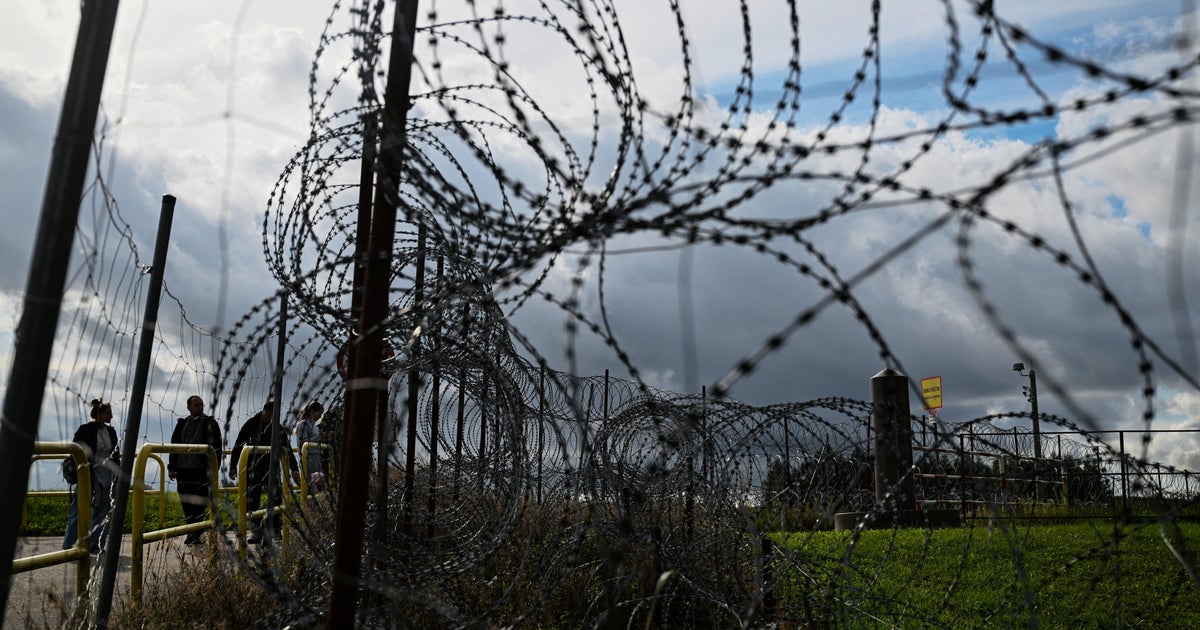
Poland has begun a broad security operation along the stretch of its frontier that borders Kaliningrad, the Russian exclave on the Baltic coast, according to CBS News. National police chief Marek Boroń said the effort started Monday and would continue until at least Nov. 8.
The reinforcements include extra police officers, counterterrorism units and soldiers from GROM, an elite military special forces unit. They have been sent to the northeastern regions of Warmia-Masuria and Podlaskie. A special command center at national police headquarters is coordinating the work.
Police said Tuesday that the aims are to protect the public, spot suspicious activity early and stop attacks on critical infrastructure.
What Tusk said
Speaking Tuesday, Tusk said security personnel had noticed suspicious movements overnight close to the Kaliningrad frontier, including people with flashlights near the border zone. He suggested that Poland's rapid reaction may have thwarted a provocation, without saying what form it might have taken.
"We very quickly mobilized the necessary security forces and means on site, and we successfully prevented any attempted acts of provocation, if that was the intention. Of course, we will never be able to completely confirm that," Tusk said.
He added that intelligence had signaled for weeks the possibility of "acts of diversion or more serious provocation" aimed at the European Union, including "the intrusion of armed individuals into Polish territory." By Tuesday afternoon, Polish authorities had not made public any evidence of a specific sabotage plan or attack coming from Kaliningrad.
Warnings that preceded the deployment
Polish and allied intelligence services had cautioned that sabotage and provocations were possible in the first half of November, with the Kaliningrad border singled out as a particular concern. Those warnings included the prospect of armed groups crossing the frontier. Domestic security agencies were already on heightened alert before the added forces arrived.
At a joint news conference with Lithuania's prime minister on Oct. 13, Tusk described a recent conversation with NATO Supreme Allied Commander Alexus Grynkewich. Tusk said it had deepened his worry about rising sabotage threats, including possible provocations involving aircraft or attacks on border crossings.
Around the same time, MI5 director general Sir Ken McCallum gave a bleak assessment of threats facing Britain and Europe. He said that among state threats, "Russia remains aggressor number one." He also warned that "The Russian military and intelligence services are once again escalating their attempts at hybrid warfare."
Why Kaliningrad draws attention
Kaliningrad is bordered by Poland, Lithuania and the Baltic Sea, and it carries considerable military and strategic weight. It is widely believed that Russian security services, including the FSB and GRU, operate there.
Just to its east lies the Suwałki Corridor, the only land link between the Baltic NATO members and the rest of the alliance. There, a short Polish-Lithuanian border sits between Russian and Belarusian territory.
A year of incidents
The alert comes after months of sabotage, airspace violations and other low-level incidents across Europe that have largely been blamed on Russia. In August, a fire hit a Polish factory that makes drones and other military components. In September, Polish officials directly blamed Russia for an arson attack on a Starlink satellite ground station.
Russian drones have repeatedly strayed into NATO airspace in Eastern Europe during the war in Ukraine. This week, Britain's Royal Navy said it intercepted a Russian spy ship off the far northern coast of Scotland, sending helicopters to track it as it was "closely monitoring" a NATO exercise near the Outer Hebrides.
McCallum said Moscow was "being careful to stay below the NATO Article 5 threshold," the line that would trigger the alliance's collective defense principle. "It'd be foolish for them to cross" it, he said, adding that Russia was sticking to "tactics that stop short — though sometimes not much short — of conventional conflict."