What happened
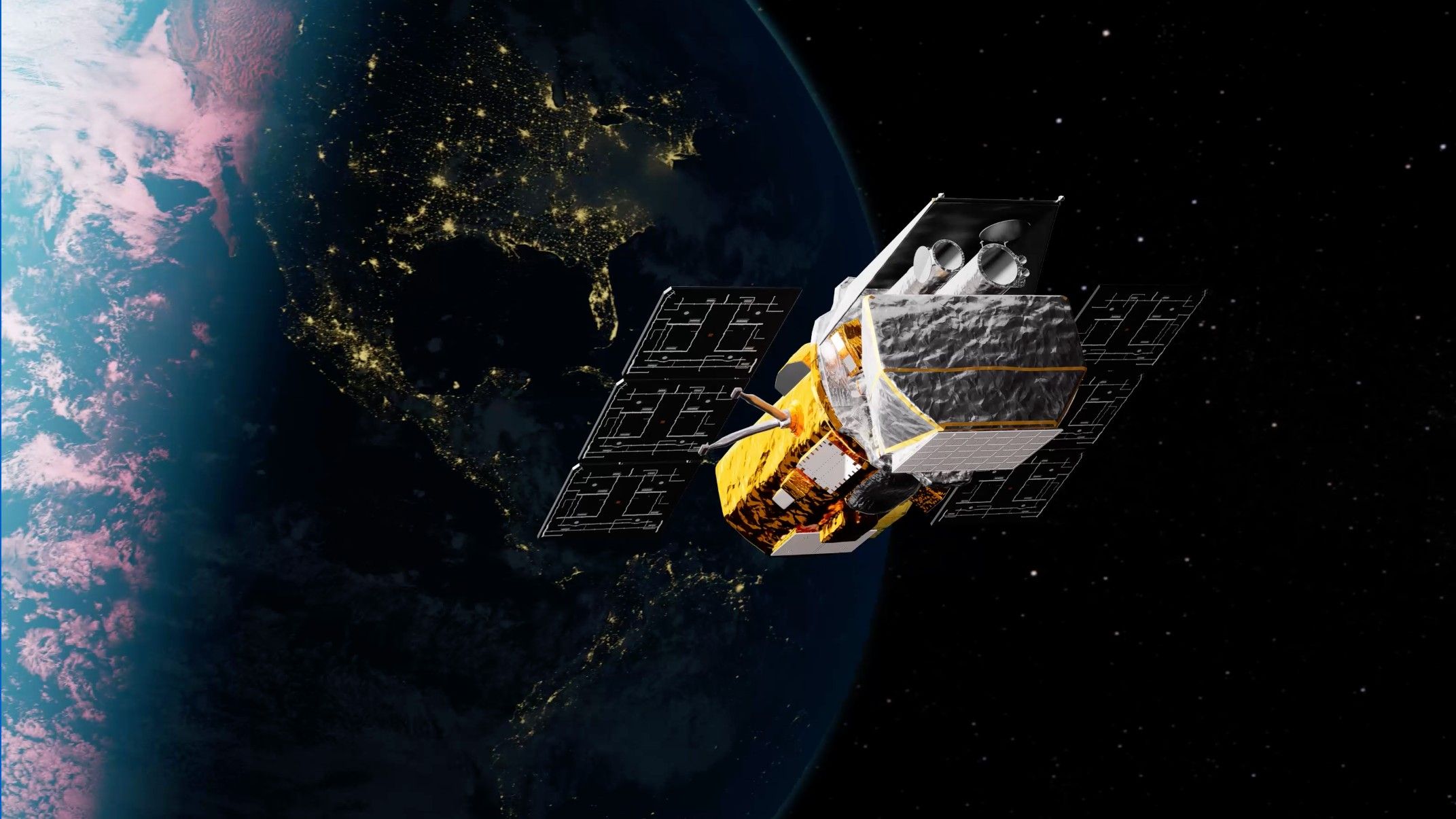
NASA's Neil Gehrels Swift Observatory is falling out of orbit and could already be back in Earth's atmosphere, according to Live Science. In an editor's note posted at 11:15 a.m. EST on Wednesday, Nov. 4, the outlet said NASA and the Aerospace Corporation both predicted the spacecraft could have reentered by that time. It added that no new details on the reentry had been provided.
NASA's most recent estimate, shared Monday, Nov. 2, put reentry at about 3:30 a.m. EST on Wednesday, with an uncertainty of plus or minus 11 hours. That window runs from Tuesday evening to Wednesday afternoon. The spacecraft weighs roughly 3,200 pounds, or 1,450 kilograms.
The Aerospace Corporation, a private nonprofit that tracks thousands of objects in orbit, made its own analysis. It estimated reentry at 6:56 a.m. EST Wednesday, give or take three hours. Live Science reported that both estimates suggest Swift may already have come down, though there is no official confirmation.
Where debris could land and the risk
NASA says the risk to people is minimal, as it is with spacecraft reentries generally. Most of the telescope is expected to burn up in the atmosphere. Any fragments that survive are likely to land between 20.6 degrees south and 20.6 degrees north latitude.
That band includes parts of Mexico, the Caribbean, Central and South America, the Arabian Peninsula, India, Africa and Oceania, along with a large amount of ocean. NASA estimates the chance of debris falling over a populated area at roughly 1 in 2,100. Live Science compared that with the lifetime odds of being struck by lightning, which the National Weather Service puts at 1 in 15,300.
NASA has said it will keep updating its predictions as the reentry window narrows.
How Swift ended up here
Swift has been losing altitude for more than a year, according to Live Science. Intense solar activity increased drag on the aging spacecraft and pulled it lower.
A costly effort to raise Swift's orbit using a private spacecraft failed shortly after launch this past August. Live Science described the failure as the final blow for the observatory. The outlet's related coverage cites a $30 million price tag for the mission.
Engineers officially shut down Swift's science operations on Oct. 20. By then the spacecraft had dropped too low to keep making steady observations of the sky.
A long scientific legacy
Swift is a multiwavelength optical, ultraviolet and X-ray telescope. It launched in November 2004 to study the most powerful explosions in space. It was designed for a two-year primary mission but operated for more than 10 times that long.
In that time it hunted supernovas, gamma-ray bursts and eruptions linked to black holes. It also detected thousands of deep-space explosions, including sudden flares from neutron stars.
According to NASA, Swift's data has contributed to more than 7,000 scientific papers so far. Live Science noted that the number will keep growing as the telescope's final observations are processed.