A royal tour under pressure
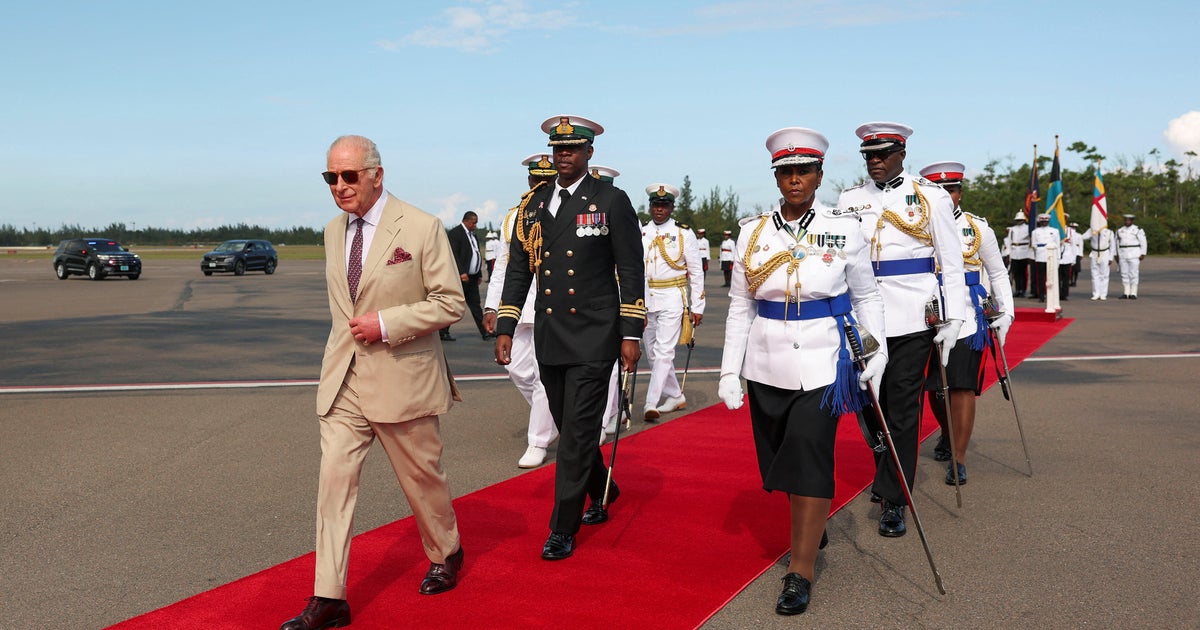
King Charles III continued a nine-day tour of the Caribbean on Thursday, according to CBS News, with growing pressure on him to apologize formally for the royal family's historic role in the transatlantic slave trade and to back calls for reparations.
He was scheduled to visit Guyana on Thursday before traveling to Antigua and Barbuda for a meeting of Commonwealth heads of state. Leaders at that gathering are expected to discuss the legacy of slavery.
The tour began Tuesday in the Bahamas. Many of the nations on the itinerary are former British colonies, and several, including the Bahamas and Antigua and Barbuda, remain constitutional monarchies, which makes Charles their official head of state.
Acknowledgment in the Bahamas, protests outside
Addressing hundreds of young Bahamians, Charles acknowledged Britain's colonial past. "Some of what is best in Bahamian culture today, the most joyful, the most hopeful, the most bright, was born out of darkness," he said. He added: "It is only right that we should acknowledge the great suffering and injustices of the past in these islands and beyond."
On Wednesday he joined a Junkanoo street parade in Nassau, surrounded by performers in elaborate costumes and feathered headdresses. Protesters nearby held placards reading "Pay us what you owe us," demanding compensation for Britain's part in centuries of slave trading.
His remarks appeared to do little to win over campaigners. Dr. Niambi Hall Campbell-Dean, chair of the Bahamas National Reparations Committee, told The Guardian they were "hollow platitudes" and said, "we deserve so much more than what was offered."
Why no formal apology
Buckingham Palace has said Charles will not offer a formal apology for slavery. It said such decisions rest with the British government rather than the royal family, but that the king will not shy away from wider discussion of the U.K.'s involvement.
Experts quoted by CBS News say the royals worry that an apology could open the door to legal claims for reparations and expose the family or the government to major financial demands. Esther Stanford-Xosei, a lawyer and reparations expert, told CBS News in 2023 that the king does not go further because of "the legal obligation to make reparation." She said the family feared the cost of an apology would be "not only money, but status."
Hilary Beckles, head of the Caribbean Community Reparations Commission, told The Guardian that people in the region want "proprietary justice, beginning with remorse" from British leaders. He urged Charles to "dig deep within his consciousness."
The historical record and a divided debate
Between the 15th and 19th centuries, roughly 5 million enslaved Africans were taken to the Caribbean, including more than 2 million to British colonies, where they worked in brutal conditions on sugar, coffee and cotton plantations. Historians have documented direct royal involvement, including investments by King Charles II and his brother James in the Royal African Company.
When slavery was abolished across most of the British Empire in 1834, the government set aside £20 million to compensate slave owners, but nothing for the enslaved. Britain later helped suppress the international slave trade, and its West Africa Squadron seized more than 1,600 slave ships and freed about 150,000 Africans between 1808 and 1869.
The reparations debate has intensified since the 2020 Black Lives Matter protests. Barbados Prime Minister Mia Mottley has been a leading advocate, calling for investment in education, healthcare and economic development. Not everyone agrees: Barbadian economist Rasheed Griffiths told CBS News that the calls amount to Caribbean leaders trying to "externalize their own failures."
Charles has spoken on the issue before, calling slavery an "appalling atrocity" that "forever stains our history" at Barbados' 2021 transition to a republic. Prince William expressed "profound sorrow" during a 2022 Caribbean tour but also stopped short of a formal apology.