What happened
Japan has launched the Martian Moons eXploration spacecraft, known as MMX, according to Hackaday. JAXA's launch report identifies the vehicle as an H3 rocket. Outlets including The Hindu, Hindustan Times and Live Science also covered the liftoff, and Live Science described it as the world's first round-trip mission to Mars's moons.
If the schedule holds, MMX will put a small rover on the surface of Phobos in 2029. A capsule carrying pieces of the moon is then expected to return to Earth by 2031 so scientists can study them in laboratories.
Why Phobos is still a puzzle
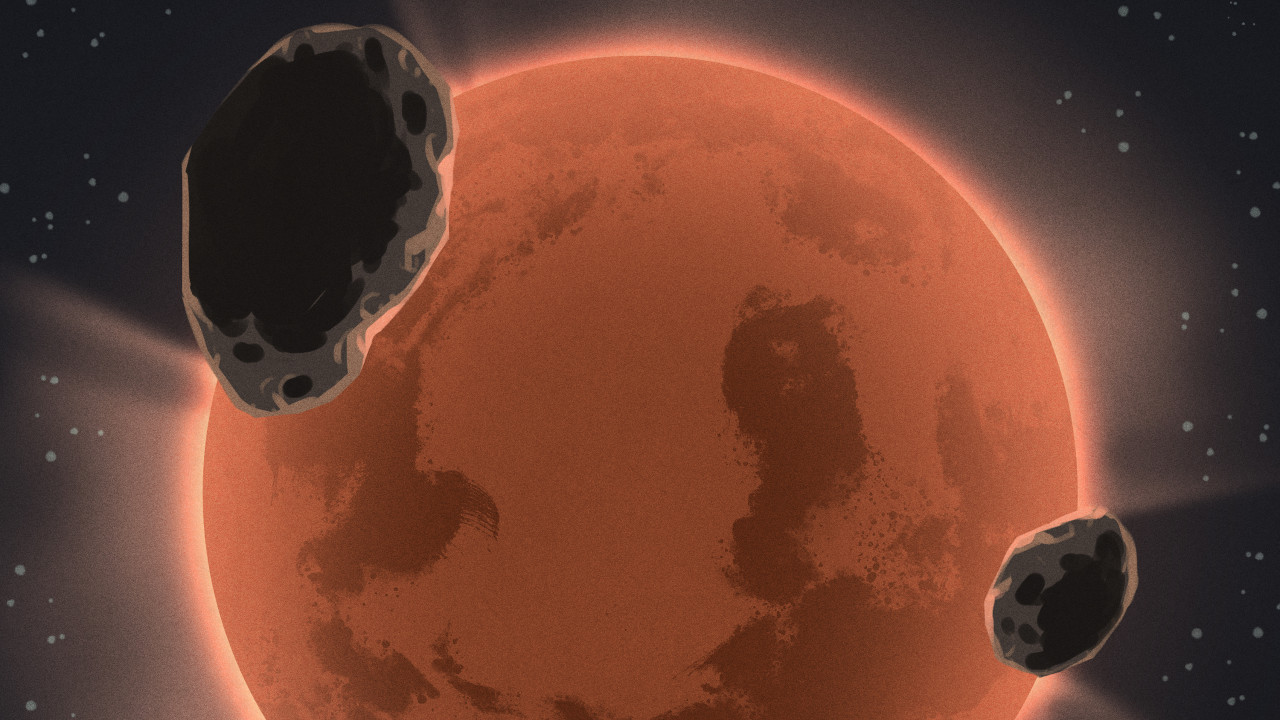
Robotic explorers have been visiting Mars since the 1970s and have returned a great deal of imagery and data about the planet. By comparison, Hackaday notes, little is known about its two moons, Phobos and Deimos.
In the 1960s some scientists speculated that Phobos's unusual shape, mass and orbit might mean it was an artificial object. Photographs and measurements from the Viking probes ruled that out. Even so, its origin and structure remain unresolved. Hackaday reports that the data suggest Phobos is not solid rock and may have large voids beneath its surface. Large deposits of ice are described as a tantalizing possibility.
A difficult arrival
Both moons are tiny next to Earth's moon, and their weak gravity means a spacecraft cannot settle into a stable orbit around either one. According to Hackaday, mission planners will use careful maneuvering to bring MMX within range of Phobos and Deimos at different times, though it cannot linger.
The approach to Phobos will therefore resemble a slow-motion crash more than a conventional landing. Hackaday compares it to the OSIRIS-REx mission, which briefly bumped into the asteroid Bennu to collect material. Impact speed must be very low so the craft does not bounce away. Some reports cited by Hackaday say JAXA expects it to hop a couple of times before it comes to rest.
Surface conditions are another unknown. Earlier observations suggest a layer of fine regolith that could make driving hard for the Idefix rover. One of the rover's main goals is to find out whether wheeled travel is workable in that environment.
What it could mean for human exploration
Hackaday argues that landing people on Mars and bringing them home is perhaps the most daunting engineering challenge ever conceived. The energy needed to land on the planet, lift off and return to orbit is enormous, and it would probably require making propellant on site.
Reaching Phobos or Deimos would take only a small fraction of that energy. Their low orbits would also make them good observation posts for Mars. Crews there could control robotic vehicles on the planet's surface without the long signal delays that rule out real-time control from Earth. Hackaday adds that such a mission would lack the symbolic weight of boots on Mars but could be a useful stepping stone.
Whether that idea is viable may depend on what MMX finds. Returned samples could show whether Phobos is made of material thrown off from Mars. If so, Hackaday expects even more interest in studying the moons up close.