New York reports its first measles death in decades
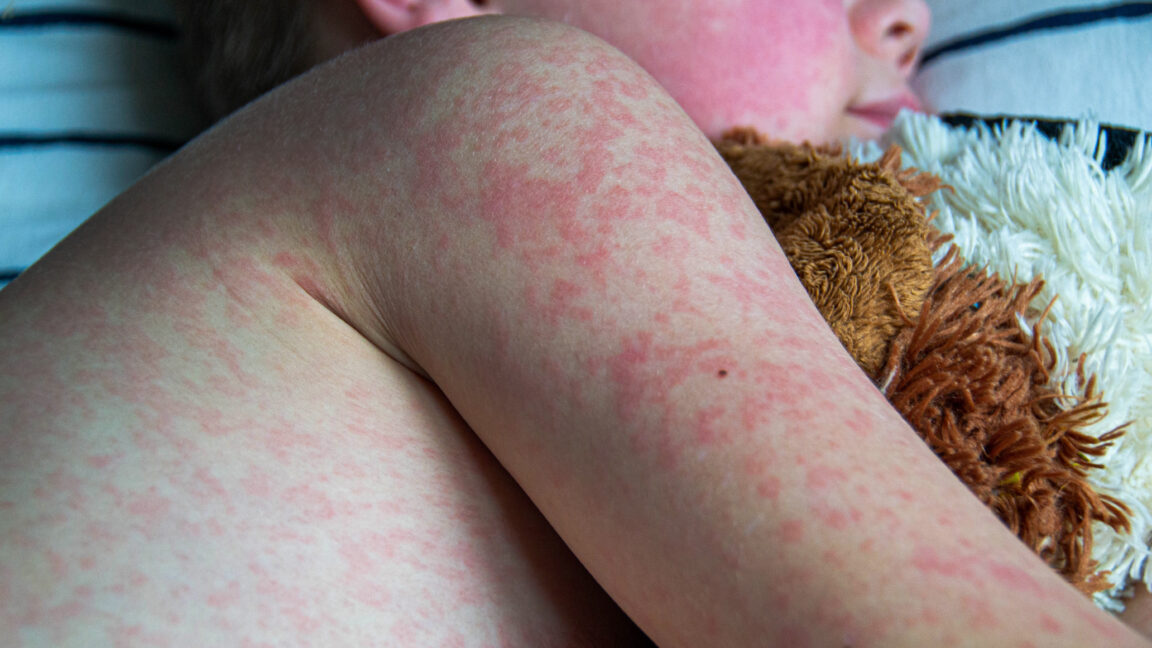
Health officials in New York announced late Monday that a child has died of measles, according to Ars Technica. It is the first reported measles-associated death in the state in more than 30 years. A headline from local outlet WKTV places the death in Lewis County.
State officials have not released the child's age or other details of the case. New York has reported 170 measles cases across more than a dozen counties.
Gov. Kathy Hochul tied the death to federal health policy in a statement. She called it "a devastating reminder of what's at stake when Washington deliberately erodes decades of progress in protecting Americans from preventable illnesses." She also said she was "heartbroken" and offered condolences to the family. "As a mother and grandmother, I cannot imagine what this family is going through," Hochul said.
Pennsylvania's outbreak and the national count
The New York death is the seventh measles-linked death in the US this year, Ars Technica reported. The other six were reported in Pennsylvania, where an outbreak has sickened more than 1,430 people this year. The state had not recorded a measles death in 35 years before this year.
According to the report, the Pennsylvania deaths include a newborn with congenital measles whose mother was severely ill at the time of birth, and a 6-week-old too young to be vaccinated. The others were an 18-year-old, a 20-year-old with leukemia, and two adults, aged 40 and 39, with underlying conditions. All of those who died were unvaccinated.
Pennsylvania's health department is currently reporting only five deaths. It told Ars Technica on Monday that its investigation into the sixth is pending. The Franklin County coroner reported that death on October 12. A Franklin County judge has ordered information about it sealed, and The Philadelphia Inquirer has taken legal action to obtain certain record details.
A blocked alert and changes to CDC reporting
Days before the New York death, The Washington Post reported that career scientists at the Centers for Disease Control and Prevention were prevented from publishing an urgent health alert for clinicians. The alert would have covered the risks and management of measles during pregnancy. Measles infection in pregnancy poses severe, potentially life-threatening risks to both the pregnant person and the fetus. Many clinicians have never seen such cases because vaccination has made measles rare.
Sources told the Post that the CDC Director's Office declined to give the approval required to issue the alert through the Health Alert Network. The scientists then turned to the agency's Morbidity and Mortality Weekly Report, which has a longer peer-review process. The Post also reported that vaccine-related studies already approved for that publication have been delayed. The scientists are now considering publishing the information outside the agency. Pennsylvania health officials released their own alert on measles in pregnancy and congenital measles on October 19.
Ars Technica also reported that the CDC has listed only three of the seven deaths this year. It said Health Secretary Robert F. Kennedy Jr. reportedly ordered the agency to delete some of the early deaths and has changed how deaths are counted. Instead of relaying state reports, the CDC now relies on federal death records. Those can take weeks to arrive and are not built for real-time outbreak response, according to the outlet.
The wider picture
The CDC reports more than 4,850 measles cases across 47 states and jurisdictions this year, with at least 511 people hospitalized. That is more than double the 2025 total of 2,289 cases and three deaths. It is also the largest annual tally since 1991. The US declared measles eliminated in 2000, a status that followed high vaccination rates.
Ars Technica attributes the rise in vaccine-preventable outbreaks to slipping vaccination rates nationwide, along with health misinformation and anti-vaccine sentiment. It also criticizes Kennedy, who spent decades attacking vaccines before taking office, and describes his actions as health secretary as a campaign against vaccines. Those include dismantling or obstructing federal vaccine recommendations and launching studies into alleged harms.