Two big cities test the idea
Robotaxis are becoming more common on American roads, yet nearly every mass transit system in the country still requires a driver or operator on board, according to reporting from Fortune. Two large cities are now trying to change that.
Officials in Washington, D.C., recently advanced a plan that could allow computers to fully control one of its subway lines. Los Angeles, meanwhile, is seeking to build a new, fully automated line. Both projects would take years to carry out and still face financial and technical hurdles.
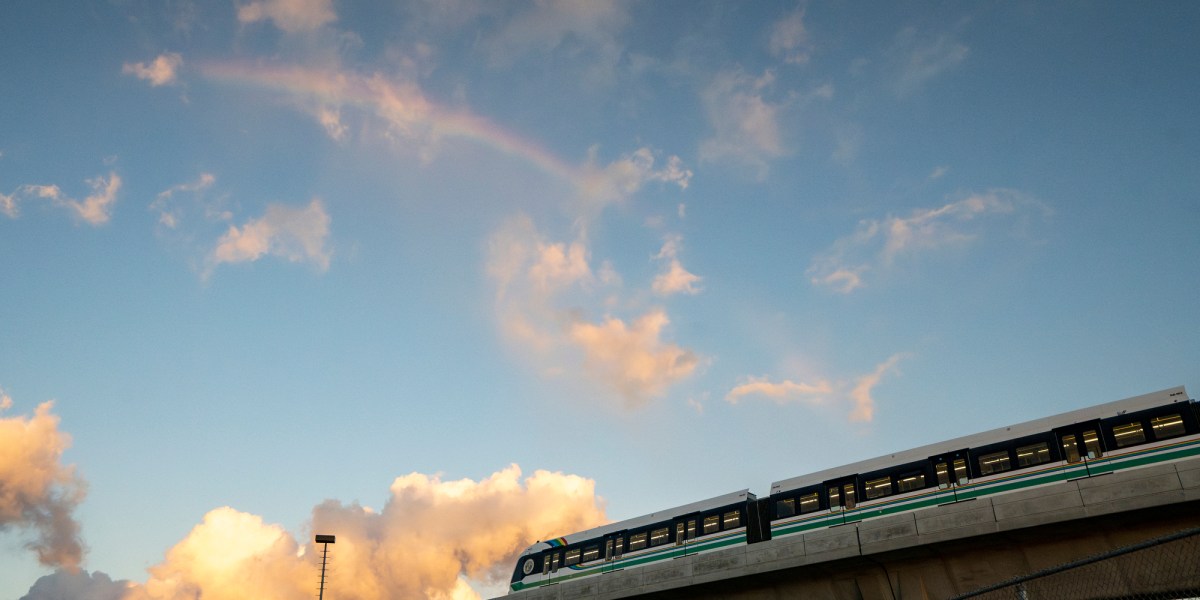
Honolulu already operates one. Its elevated driverless line, which will stretch 19 miles once finished, is the most expansive automated transit system in the U.S., the report said.
Washington's Red Line plan
Metro trains in Washington have always had operators, but the system opened 50 years ago with some automated features. Those were switched off after a fatal 2009 crash and restored over the past two years, according to the report.
Under a nearly $1 billion plan that Metro's Board of Directors backed in April, the Red Line would be upgraded with safety features, including protective barriers that keep passengers off the tracks. Trains could run without a human in the cab as early as 2033.
Randy Clarke, CEO of the Washington Metropolitan Area Transit Authority, told The Associated Press that workers would still be needed to maintain the tracks and respond to emergencies. He also said the crash had "paralyzed" Metro's plans for further automation for many years.
The 2009 crash and the safety debate
Nine people were killed in the 2009 collision near the Fort Totten station on the Red Line. The National Transportation Safety Board blamed a maintenance problem in the automated signaling system that keeps trains apart. Clarke noted that the issue was unrelated to the cruise control-like system restored on the Red Line in 2024 and on other lines last year.
Honolulu's Vance Tsuda, project director for the Skyline system, said there has not been a single crash or injury associated with automation. He argued that hybrid systems are less safe than fully automated ones because a person could overlook something like an open door and clear a train too early.
Unions disagree. John Samuelsen, international president of the Transport Workers Union, said unions have fought off automation efforts in New York and elsewhere, calling them "a catastrophe waiting to happen." He warned that passengers would be left dealing with self-evacuation on a system that runs on a third rail.
David King, an associate professor of urban planning at Arizona State University, said the success rate must remain perfect to keep public trust. He said the public tolerates more failure from private industry than from government.
Los Angeles aims under the mountains
Perhaps the most ambitious effort is the subway line Los Angeles officials voted to recommend beneath the Santa Monica Mountains, which separate the Westside employment hub from the San Fernando Valley. The area is among the country's most notorious traffic headaches. A subway already runs under the same range near Hollywood, but it has a driver.
The proposal is undergoing an environmental review. Cecily Way, who oversees planning for the Sepulveda Project for LA Metro, said it would use shorter, more frequent trains. Like Washington's plan, it would include station doors to protect people on platforms.
Baruch Feigenbaum of the Reason Foundation, a libertarian think tank that has advocated for automation, said that a major line in either city could open the floodgates for others. He said it would signal that automation is technologically doable.