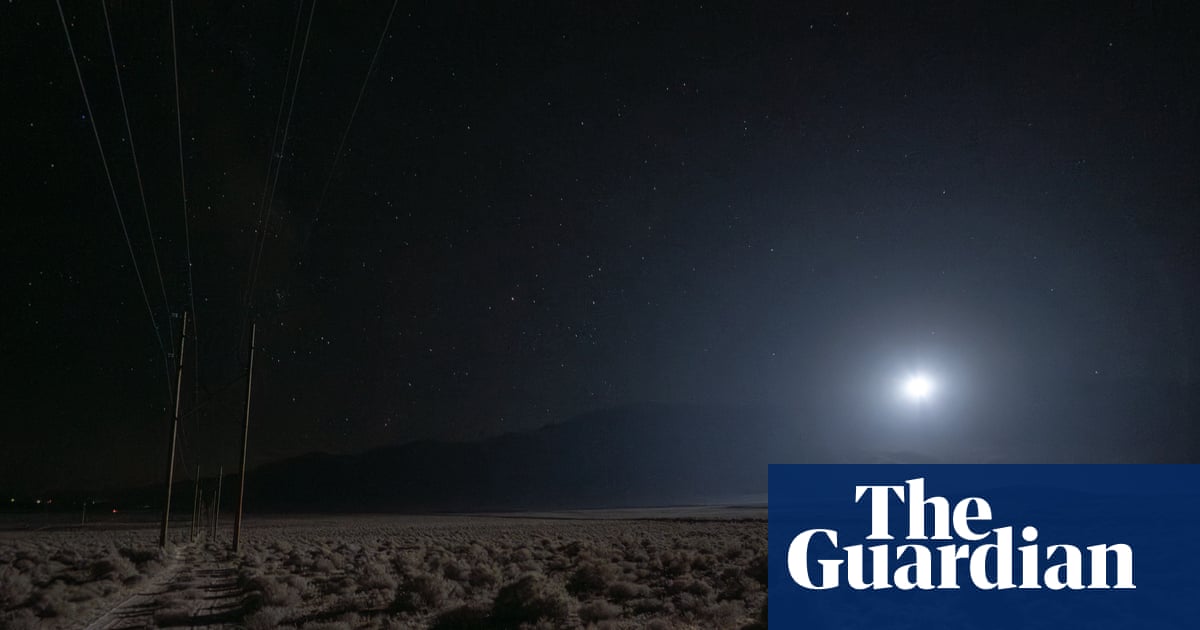
A bright surprise in the Sierra Nevada
Residents of a rural stretch of California were startled earlier this month when intense light shone from nearby mountains and lit up part of the desert below, according to The Guardian. The glow was a demonstration by Reflect Orbital, a US startup, near the town of Lone Pine in the Sierra Nevada region.
The company set up large mobile lights near Mount Whitney and compared the brightness to that of a full moon. One local described the lights as "blinding." Reflect Orbital said the test was meant to simulate how its technology could help search-and-rescue teams and other emergency responders working at night, and that it partnered with a local search-and-rescue team for the exercise.
What Reflect Orbital wants to build
The company's stated aim is to launch 50,000 satellites in the next decade to light up parts of the world after dark. In July, the Federal Communications Commission approved its proposal to launch an initial demonstration satellite next year. That satellite would orbit Earth and use a 59ft-diameter mirror to send sunlight down in 3-mile-wide beams. The strength could range from moonlight to the brightness of the sun at noon.
Beyond emergency response, the company has floated other uses, including lighting crops, replacing broken streetlights and supplying solar power for military operations. Customers would request the light through an app. Reflect Orbital also argues that pointing sunlight at solar panels at night would raise their output and reduce reliance on fossil fuels.
A company spokesperson said search-and-rescue teams are expected to be the first customers. "We'll keep working closely with local communities and authorities wherever we operate," the spokesperson said.
Criticism from environmental and scientific voices
A coalition of environmentalists and astronomers has criticized both the company and the FCC. They say the plan threatens the natural separation of night and day, with effects ranging from sleep to wildlife behavior to the ability to see stars.
"This is an idiotic project," said Jan Hasselman, a senior attorney with Earthjustice. He said there are "a huge number of unresolved questions and significant potential impacts," and called for "some sort of discussion and analysis" before the company is granted the right to alter the night sky. In August, four groups represented by Earthjustice asked the FCC to reconsider its approval. The satellites would reach about 400 miles (645km) above Earth before reflecting light back down.
Critics point to several concerns. Birds, insects and mammals depend on a predictable day-night cycle to feed, shelter and mate. Astronomers say the glare would add to existing light pollution and could encourage more satellite launches, which would obscure stars and add to space debris. The article also notes worries that disrupted circadian rhythms could harm human health, and that looking directly at the reflected sunlight could damage eyes, much as watching a solar eclipse can.
Climate concerns and the company's response
Some climate scientists have also cautioned against altering how much of the sun's energy reaches Earth. David Ho, a climate scientist at the University of Hawaii, said global warming stems from a radiative imbalance caused by greenhouse gases. He referred to proposals for space mirrors that face away from Earth to cut warming, then said: "Imagine wanting to turn those mirrors around so that the Earth gets hotter." Separate solar geoengineering proposals, in which particles are sprayed into the atmosphere to deflect sunlight, have also drawn fierce opposition, according to The Guardian.
Reflect Orbital said it has had "substantive discussions" with scientists and astronomers about using its technology to avoid places such as astronomical sites, national parks and wildlife-rich areas. "We welcome oversight and want to play a role in shaping it," a spokesperson said, adding that the company believes it should work alongside governments, scientists and regulators "rather than ahead of them."
What happens next
The FCC has not, according to the source material, responded to the request for reconsideration. The demonstration satellite is planned for next year, and its performance and any regulatory review will likely shape whether the larger constellation proceeds.