What happened
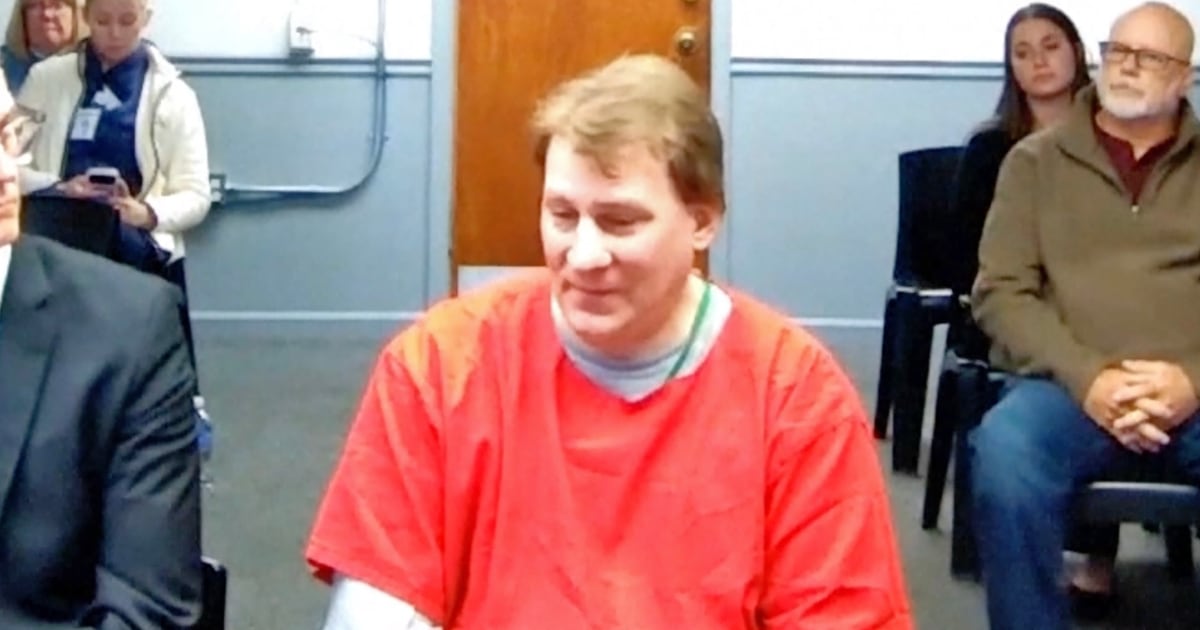
Indiana carried out its first execution of the year early Thursday. Jeffrey Weisheit, 50, was put to death at Indiana State Prison shortly after midnight for the 2010 killings of two young children in a house fire, state officials said, according to NBC News. He had no last words and was pronounced dead 45 minutes later.
The Indiana Supreme Court allowed the execution to go ahead late Wednesday in a 3-2 vote. The two dissenting justices would have permitted a 10-day pause to sort out questions over the lethal drugs. The state does not generally allow media witnesses, and Weisheit's legal team could not immediately be reached for comment afterward.
Weisheit's was one of three executions set nationally for Thursday. The others were to be carried out by lethal injection in Alabama and Florida.
Questions over the drug supply
In the hours before the execution, Weisheit's attorneys urged Gov. Mike Braun to stop it and order an independent review of state procedures. They alleged the state had obtained its chemicals from a pharmacy that is on probation and faces possible suspension of its license. Weisheit did not contest his guilt, but he asked the governor to commute his sentence to life in prison without parole.
Joe Perkovich, an attorney for Weisheit, said in a statement Wednesday: "Laid bare, the apparent conduct here is patently unworthy of the public's confidence in the solemn exercise of state power in taking a human being's life in the name of the people." The application also pointed to Tennessee's failed execution of Christa Pike on Sept. 30. It argued that Indiana's protocol is "more susceptible to catastrophic failures such as the one that placed Ms. Pike in a coma."
NBC News reported that an updated inventory log showed the Department of Correction added six vials of pentobarbital to the prison supply on Oct. 29. An invoice in the reprieve application says the state paid $275,000 for them, far above the typical $15,120 to $16,250 price for commercially made injectable pentobarbital. That invoice is heavily redacted and shows neither a date nor a supplier.
The pharmacy and the manufacturers
Indiana law shields the identities of pharmacies and suppliers involved in executions. But according to exhibits in the reprieve application, a September 2025 invoice for the same dollar amount accidentally revealed an address beneath a black redaction. That address matches Pharmaneek, an Indianapolis-based pharmacy. The exhibits were produced by the Department of Correction in response to a records request.
Pharmaneek is scheduled to appear before the Indiana Board of Pharmacy on Monday over allegations that it violated its probation after failed inspections. Inspectors reported drugs stored in unlabeled bottles, expired drugs on active shelves and inconsistent temperature logs. In a settlement agreement with the state, the pharmacy said some problems stemmed from remodeling. An FDA report from March 2026 said the "facility is not maintained in a good state of repair, creating unsanitary conditions whereby drug products may be contaminated with filth." The report notes that its findings are not a final determination of compliance.
The application alleges Pharmaneek, which is barred from compounding custom drugs, is acting as a middleman that supplies manufactured pentobarbital the department cannot buy directly from traditional manufacturers. Hikma, one of two U.S. makers of pentobarbital, said it has no purchase agreement with the pharmacy. Representative Steven Weiss said, "We have strict prohibitions and controls intended to prevent the use of our medicines in capital punishment." The other maker, Sagent Pharmaceuticals, did not answer questions about any relationship, though its policies bar distributors from selling its products to prisons for lethal injection.
Officials respond
Pharmaneek and the Department of Correction did not respond to NBC News' requests for comment, and the governor's office declined to comment Wednesday. A spokesperson for Attorney General Todd Rokita said the office was "confident in the ability to safely and lawfully carry out the scheduled execution." The spokesperson added that Weisheit's lawyers publicly named a pharmacy despite state law requiring supplier information to stay confidential.
After the execution, Rokita said the state was delivering "long-awaited justice" for Alyssa Lynch, 8, and her brother Caleb, 5. He said in a statement, "This case stands as a clear affirmation that those who commit the most heinous crimes against the most vulnerable will be held fully accountable under Indiana law."
The case behind the execution
A Vanderburgh County jury convicted Weisheit of murdering the children of his then-girlfriend, Lisa Lynch. She was at work while he watched them at their Evansville home. Prosecutors said he bound and gagged Caleb, placed railroad flares in his clothing and near his body, then set the house on fire and fled out of state. Alyssa's body was found in a closet, and both children died of smoke inhalation.
Weisheit spent 13 years on death row. His appeals, including a claim of ineffective counsel, were denied. He appeared at a clemency hearing last month.