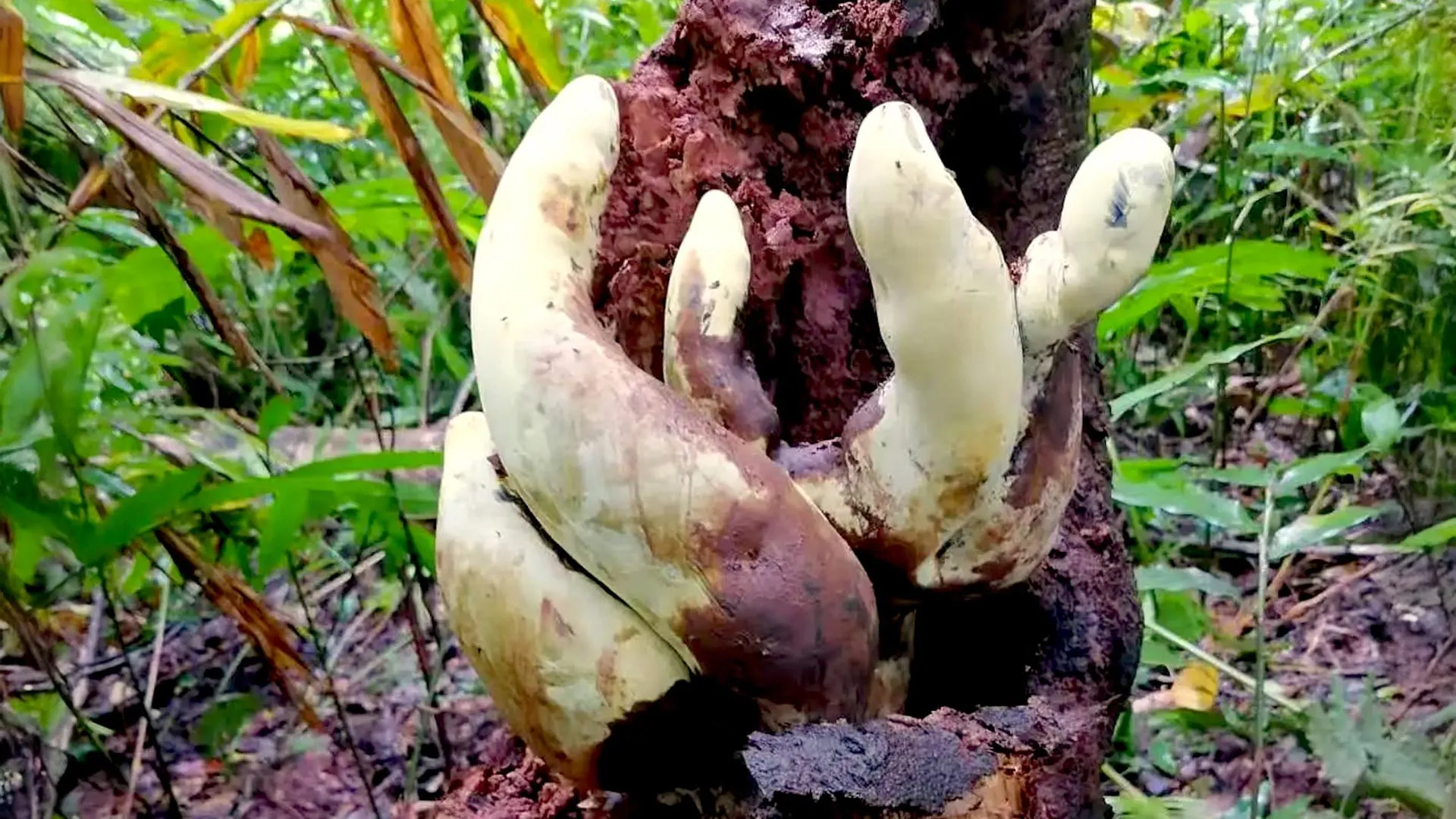
A record-sized fungus in Yunnan's forests
Scientists surveying forests in Yunnan, China, have described a giant fungus that exceeds the size previously known for its group. The species, named Dianjunus rex, forms upright reproductive structures that can grow to 50 cm (20 inches) tall and weigh up to 2.2 kg (4.9 pounds), according to a study published in Frontiers in Fungal Biology. These are the largest known fruiting bodies among fungi in the phylum Ascomycota.
Before this find, the tallest known ascomycete fruiting bodies measured roughly 20 to 30 cm, so the new fungus is substantially taller than earlier record holders, according to the researchers.
"This remarkable species represents a new fungal family, Dianjunaceae, and provides a rare window into the evolution of extreme fungal body forms," said Dr Indunil C Senanayake of the Kunming Institute of Botany, the study's corresponding author.
How the team found and studied it
Researchers from the Kunming Institute of Botany came across the fungus while surveying several forest types in Yunnan. Their fieldwork covered temperate coniferous forests near Damaidi and Yipinglang and tropical rainforest near Nanbang. They noticed unusually large, whitish reproductive structures, called stromata, growing from the woody roots of Chinese cork oak trees and emerging from the rhizosphere, the soil zone around plant roots.
Ascomycetes are the largest major group of fungi, with more than 64,000 recognized species. They do not form true mushrooms; instead they produce spores inside tiny sac-like structures in or on their fruiting bodies.
The team collected samples, deposited reference specimens in the institute's collections, grew spores in the laboratory to examine the fungus's characteristics, and sequenced its genome, including its protein-coding genes.
A new family with a close but lonely relative
Genetic analysis and a close look at physical features showed the fungus was far more than a new species. It differed enough from known fungi that the researchers created a new genus and a new family, Dianjunaceae, within the order Xylariales. They chose the name Dianjunus rex in reference to its size and the ancient Dian kingdom; the nickname 'D-rex' reflects its stature among related fungi.
Its closest known relative is Graphostroma platystoma, which grows on dead hardwood across the Northern Hemisphere and is the only member of its own family, Graphostromataceae. Xylariales fungi are known for producing specialized chemical compounds and enzymes that break down complex plant molecules. The researchers believe similar enzymes may let D-rex decompose dead wood and draw nutrients from it.
Ties to the age of the dinosaurs' extinction
Using a molecular clock, the scientists compared the fungus's DNA with genomic data from hundreds of other fungi with established evolutionary histories. Their estimate is that the Dianjunaceae lineage originated about 65 million years ago, roughly one million years after the Cretaceous-Paleogene mass extinction that eliminated the non-avian dinosaurs and many other species.
"After the mass extinction, forests experienced dramatic changes, including the sudden availability of large amounts of dead plant material," Senanayake said, adding that for wood-associated decomposers, such disruption "may have created new ecological opportunities." The researchers present this as a possibility rather than a settled conclusion.
Why the fungus grew so large also remains an open question. One hypothesis is that a tall structure catches moving air and disperses spores more widely through dense vegetation. But a big structure demands considerable energy, so the researchers suggest the strategy would pay off only where the dispersal benefits outweigh the cost.
More fungi likely await discovery
The team says the find underscores how much is unknown about fungal diversity in China's subtropical forests. They argue the region favors unusual fungi because of its varied habitats, relatively stable climate and complex interactions among organisms.
Senanayake said diversity there has been underestimated because of logistical difficulties in field sampling, the seasonal and cryptic nature of fungal fruiting, and a historical emphasis on economically important fungi. The scientists expect continued exploration to uncover additional species and evolutionary histories.