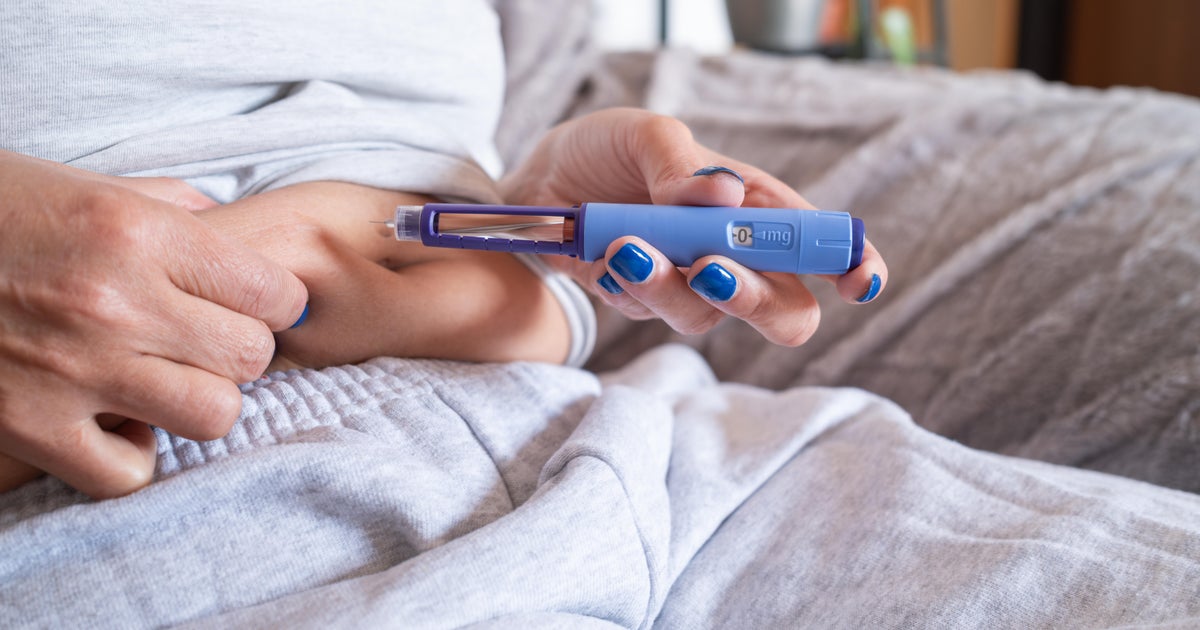
GLP-1 drugs could lead to cost savings for workers and their employers by reducing employee sick leave, a new economic study finds. Researchers found that patients who used the drugs, sold under brand names including Ozempic and Wegovy, took 17% less long-term sick leave than people who didn't use the medications. The study defines long-term sick leave as illness-related absences lasting more than 30 days, according to the paper, published this month by the National Bureau of Economic Research.
GLP-1 drugs , which are prescribed to people with diabetes or obesity, are known to improve patients' health, including by reducing the risk of major adverse cardiovascular events, including heart attacks and strokes, research shows. "Those events, we'd imagine, would lead to long-term absences from work," Jonathan Zhang, one of the study's co-authors and a professor at Duke University, told CBS News. "So you can imagine the savings of not having those absences." The reduction in worker absences translates to savings of up to 1.5% of an individual's salary, or roughly $866 on average, according to the study, which analyzed worker and medication usage data from Denmark.
To be sure, Denmark's sick leave policies differ greatly from those in the U.S. For example, in Denmark, employers must pay their workers their full salaries for illness-related absences of up to 30 days, while the government covers long-term sickness leave of more than 30 days. A reduction in short-term illness led to savings for employers, while fewer longer-term absences saved the government money, according to the report.
"Imagine you take two days off, your employer would still pay your salary," Zhang explained. "Now they still pay your salary, but you don't take the time off," he said of patients taking GLP-1 medications. Because long-term sick leave in Denmark is covered by the government, cost savings related to GLP-1 drug use would accrue to the government.
"There are fiscal benefits, but that doesn't look like savings for the patient or the individual, because sick leave benefits are so generous," Zhang said. Zhang said the survey findings could apply to the U.S. labor market.
"In the U.S., which doesn't have the generous sick leave policy of Denmark, people get sick and they go to work. They're less productive because they feel crappy," he said, noting that neither the employee nor the firm benefits in such a scenario. He added that if the drugs help reduce "presenteeism" — when employees come to work but aren't able to perform at their best because of health issues — companies could become more productive while workers could get more done and potentially earn more promotions.
Wearable devices may help detect early pregnancy changes, researchers say Women with long COVID suffer more neurological symptoms than men, Northwestern study finds How much wealth you need to thrive based on your age What are the best ways to lower your credit card interest rates now? Here's what some experts think.